Data for 10,000 Years: Glass Beats SSD and Tape
Authors: Microsoft Research, Peter Kazansky

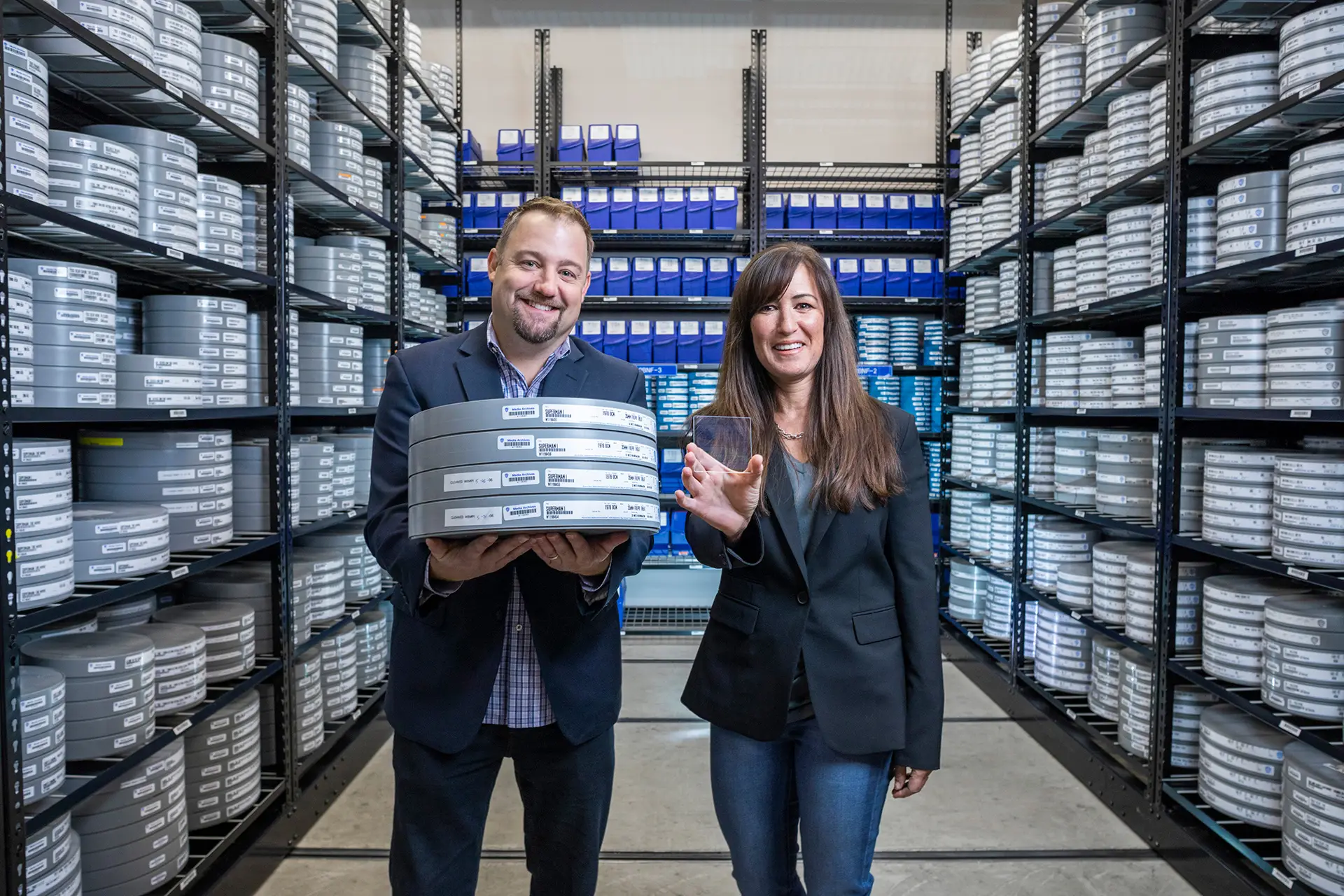
Why It Matters
Every day, humanity generates around 400 million terabytes of data. Medical scans, satellite images, scientific experiments, government archives — all of it needs to go somewhere. The trouble is that no modern storage medium is built to last: hard drives survive 5-10 years, SSDs up to 10, magnetic tape 15-30. Every few years, data must be migrated to fresh media — costing money, energy, and patience.
Microsoft Research has proposed a radical solution: writing data inside ordinary glass. Their Project Silica packs 4.8 terabytes into a palm-sized plate — and that data will outlive not just your laptop, but potentially civilization itself. The paper was published in Nature in February 2026, and this isn’t another lab curiosity: it’s backed by 8 years of research and a real cloud-storage architecture.
The Core Idea
Imagine a notebook where you write not on the pages but inside them — across 301 layers of paper simultaneously. That’s roughly how Project Silica works: a femtosecond laser creates microscopic dots (voxels) within the body of a glass plate, each encoding data.
Voxel — a three-dimensional pixel. If a pixel is a dot on a flat screen, a voxel is a dot in a volume. In Project Silica, each voxel is less than 1 micrometer across.
Femtosecond laser — a laser emitting pulses lasting about 10⁻¹⁵ seconds. In that time, light travels just 0.3 micrometers. Yet the peak power exceeds 1 TW/cm² — enough to permanently alter the molecular structure of glass.
The key breakthrough is that the latest version of Silica works with borosilicate glass — ordinary Pyrex used in lab equipment and kitchen bakeware. Previous experiments required expensive fused quartz. Switching to a cheap material is like going from a Formula 1 car to a production sedan that anyone can buy.
How It Works

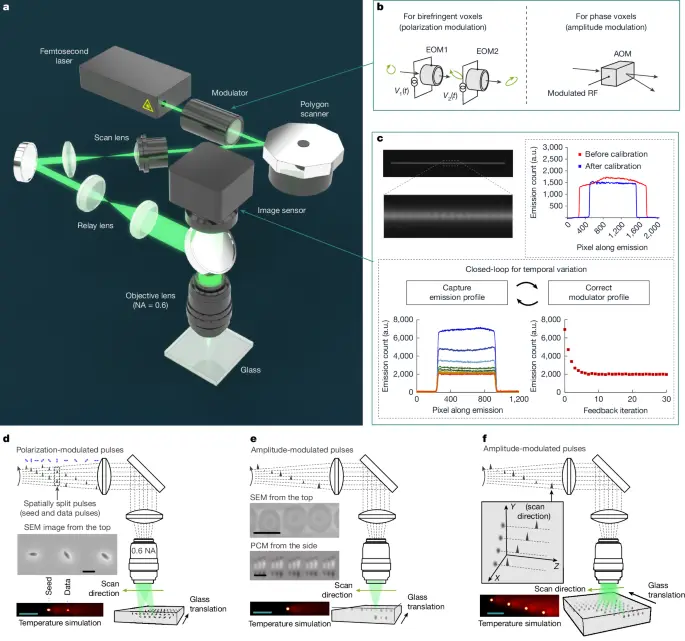
Fig. 2: Writing process — a femtosecond laser focuses at different depths, creating voxels across 301 layers. Source: Nature (2026)
Writing
The femtosecond laser focuses at a specific depth inside the glass plate and creates a voxel — a spot where the glass’s molecular structure has been altered. The team developed two writing modes:
- Void-type — the laser creates a micro-void inside the glass. Record density: 1.59 Gbit/mm³.
- Phase-type — the laser changes the refractive index without destroying the material. Write speed: 25.6 Mbit/s per beam at just 10.1 nanojoules per bit.
Data is encoded through the voxel’s position in three dimensions (X, Y, Z) plus optical parameters — phase shift and birefringence. This creates a kind of «4D code.»
Reading

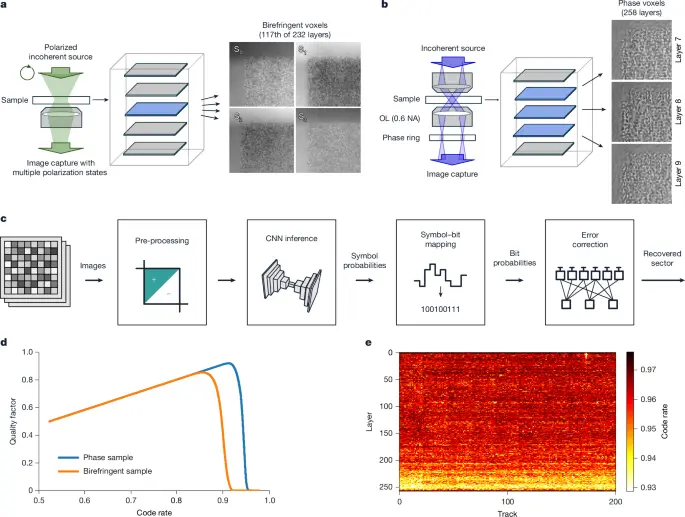
Fig. 3: Reading data — polarized light passes through the glass, and ML algorithms decode voxels back into bits. Source: Nature (2026)
Reading uses a polarization microscope and camera. Light passes through the glass, voxels alter its polarization, and machine learning algorithms decode the signal back into bits. Crucially, access is random — you can read any section of data without scanning the entire plate from start to finish, unlike magnetic tape.
Storage

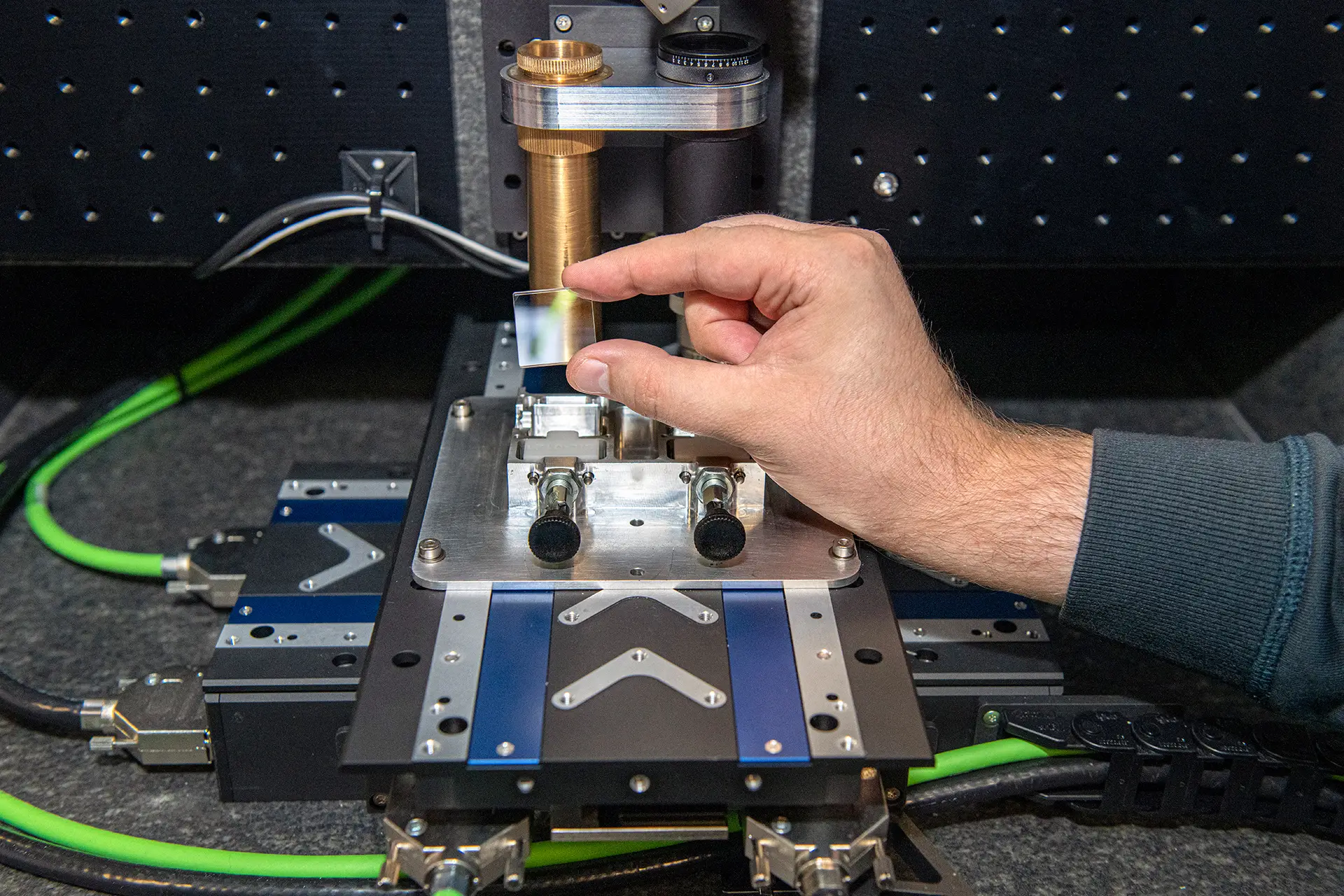
Fig. 4: Femtosecond laser at Microsoft Research lab — the system for writing data into glass. Source: Microsoft Research
The glass plate requires no electricity, cooling, sealed environment, or any maintenance whatsoever. It just sits on a shelf. Accelerated aging tests show the data will survive over 10,000 years.
Results
Here’s what the Project Silica team achieved in their latest work:
| Parameter | Value |
|---|---|
| Capacity | 4.8 TB per plate |
| Plate dimensions | 120×120×2 mm |
| Number of layers | 301 |
| Write density | 1.59 Gbit/mm³ |
| Write speed | 25.6 Mbit/s (per beam) |
| Energy efficiency | 10.1 nJ/bit |
| Data lifetime | > 10,000 years |
For perspective: one Silica plate holds roughly 2 million books or 5,000 UHD movies. It fits in your palm and weighs about as much as two chocolate bars.
Critical Analysis
This work has been published in the peer-reviewed journal Nature (DOI: 10.1038/s41586-025-10042-w). The analysis below is based on data from the publication and independent sources.
Strengths
- Nature publication confirms scientific rigor. This is not a press release or preprint.
- Borosilicate glass instead of quartz is a major step toward affordability. Pyrex costs pennies compared to optical-grade fused silica.
- Energy independence — the plate draws zero power during storage, dramatically reducing the carbon footprint of archival data.
Limitations
- Write-once only (WORM — Write Once, Read Many). Data cannot be deleted, overwritten, or modified. The laser physically alters the glass structure — it’s irreversible.
- Slow writing. At 25.6 Mbit/s, it’s 125 times slower than writing to LTO-9 tape (400 MB/s). Silica is viable only for cold archives where data is written once and rarely read.
- Expensive equipment. Femtosecond lasers cost hundreds of thousands of dollars. There is no commercial product yet — Microsoft plans pilots in 2025-2027 and a production version by 2030.
Open Questions
- Format vs. medium. The glass will last 10,000 years — but will anyone in 10,000 years know how to read it? We already struggle with 50-year-old 8-track tapes.
- 15 years of promises. Skeptics rightly note that similar headlines appear every year since the 2010s. The technology has yet to leave the lab.
What’s Next
Project Silica isn’t about replacing your SSD. It’s about archives that survive centuries: government records, cultural heritage, genomic databases, scientific experiments.
Microsoft is already testing robotic libraries for glass plates — like tape libraries, but without moving parts inside the medium itself. Meanwhile, the University of Southampton is developing «5D writing» in quartz with a theoretical lifetime of 10²⁰ years.
The real question is no longer «can we write data in glass» — that’s proven. The question is whether femtosecond lasers can become cheap and fast enough to make the technology economically viable. As project lead Richard Black puts it: «All of the scientific challenges are solved — now, it’s only about the laser.»
Official Microsoft video: how Project Silica stores data for thousands of years. Source: Microsoft
Frequently Asked Questions
How is glass storage better than a regular SSD or hard drive?
SSDs and HDDs store data for 5-10 years and require electricity. A Silica glass plate stores data for over 10,000 years, consumes no power, and is immune to water, magnetic fields, and temperature swings. However, SSDs are dramatically faster and support rewriting — Silica operates in write-once, read-many mode only.
Can data on a glass plate be rewritten?
No. Writing physically alters the molecular structure of the glass — it’s an irreversible process. Silica follows the WORM model (Write Once, Read Many). Erasing or modifying recorded data is impossible. But at 4.8 TB per plate, this is manageable: you can mark old data as obsolete and write fresh data to a new plate.
What if the glass breaks?
Data is written inside the volume of the glass, not on its surface. A surface scratch won’t damage the information. The plate itself — borosilicate glass (Pyrex) — is heat-resistant and chemically inert. Of course, dropping it on concrete would shatter it, but in a robotic library that’s unlikely. Moreover, glass plates with no electronics are physically more resilient than server racks.
Will we be able to read these data in 10,000 years?
That’s an open question. The glass will survive — but the encoding format and reading technology may become obsolete. Microsoft proposes storing the format specification alongside the data on the same plate. Think of it as carving instructions on a stone next to the treasure.
When can I buy one?
Not yet. Microsoft plans pilot projects in 2025-2027 and a commercial version by 2027-2030. The main obstacle is the cost of femtosecond lasers, which currently run into hundreds of thousands of dollars.
References
Related
Related Articles

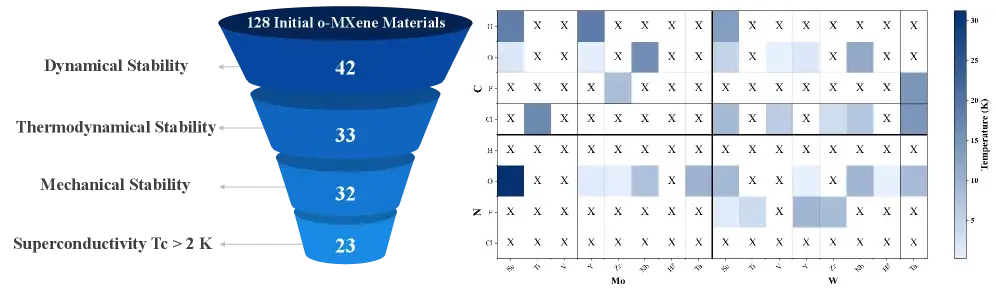
52 K Superconductor: 2D MXenes Breakthrough
Scientists predicted superconductivity at 52 K in functionalized MXenes — the highest predicted temperature for any 2D material.

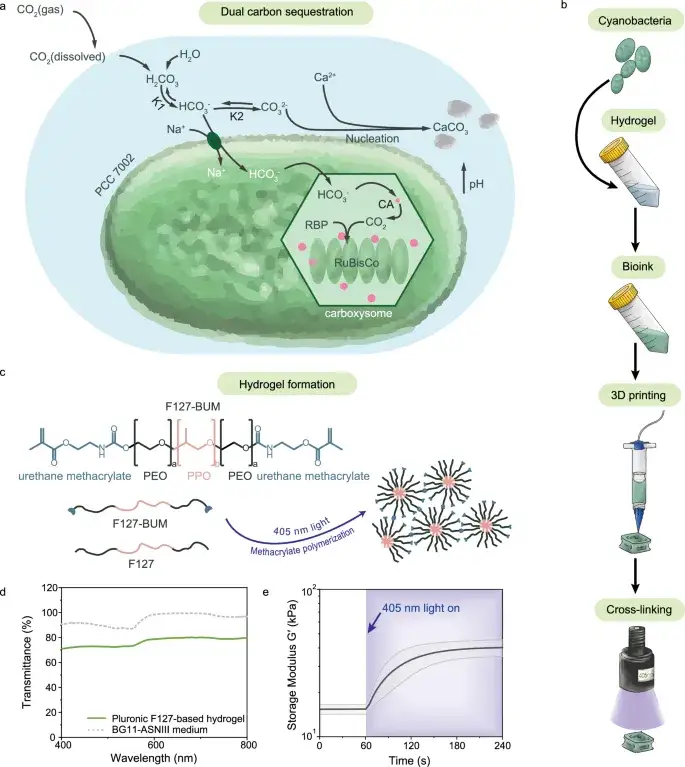
Bacteria Gel Captures CO₂ While Growing Stronger (2025)
ETH Zurich engineered a 3D-printable hydrogel packed with cyanobacteria. It absorbs CO₂ via photosynthesis and grows harder over time.

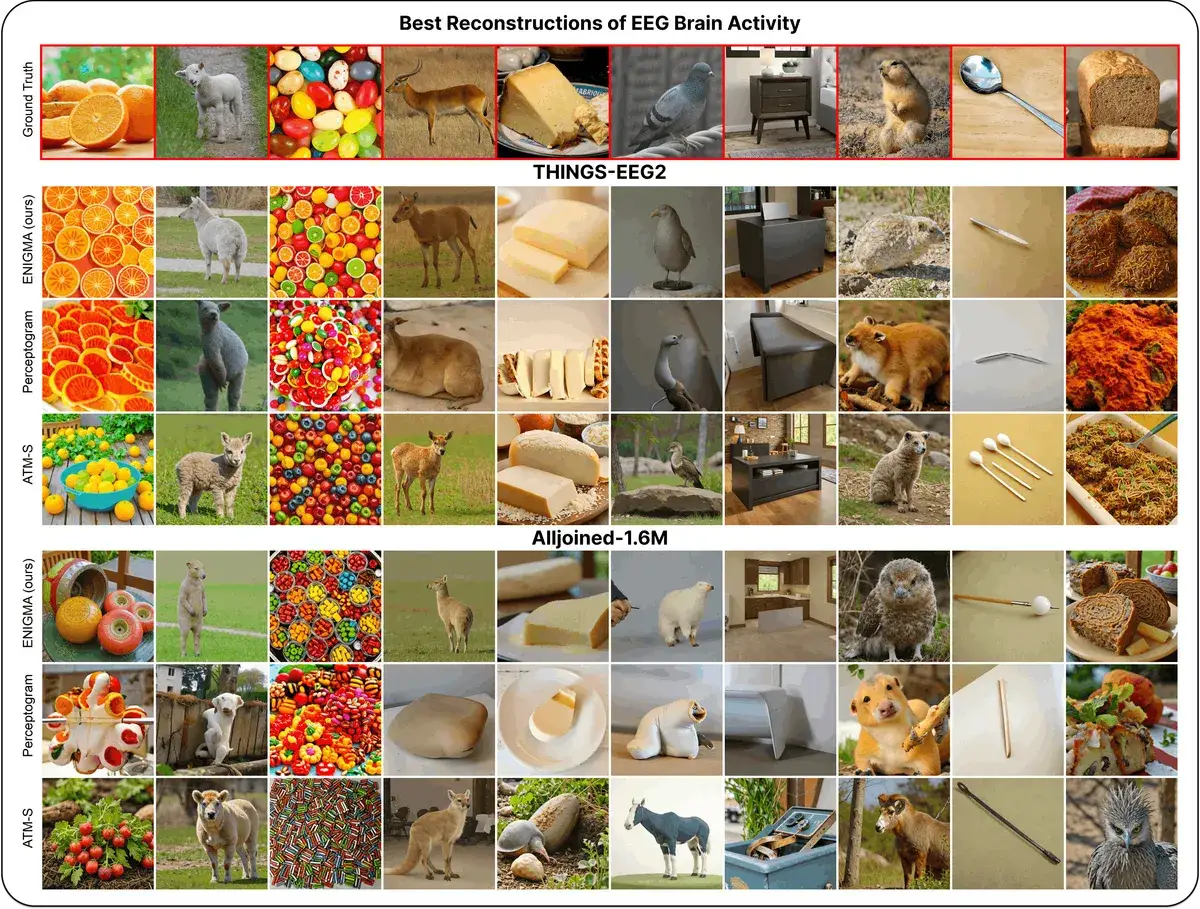
ENIGMA: Reading Minds in 15 Min via EEG
ENIGMA reconstructs images from EEG signals after 15 min of calibration, using under 1% of previous methods' parameters.