Mantle Earthquakes: First Global Map in 35 Years
Authors: Shiqi Wang, Simon L. Klemperer

Why This Matters
Everyone knows earthquakes happen in Earth’s crust — the thin, brittle layer on our planet’s surface. But it turns out they also occur deeper — in the mantle, a hot, semi-solid layer nearly 3,000 km thick that makes up the bulk of Earth’s interior.
For decades, geophysicists debated whether this was even possible. The mantle is too hot and plastic — it flows rather than cracks. Now, Stanford scientists have not only proved that mantle earthquakes are real, but have created their first global map. This changes our understanding of how the planet works from the inside out.
The Core Idea
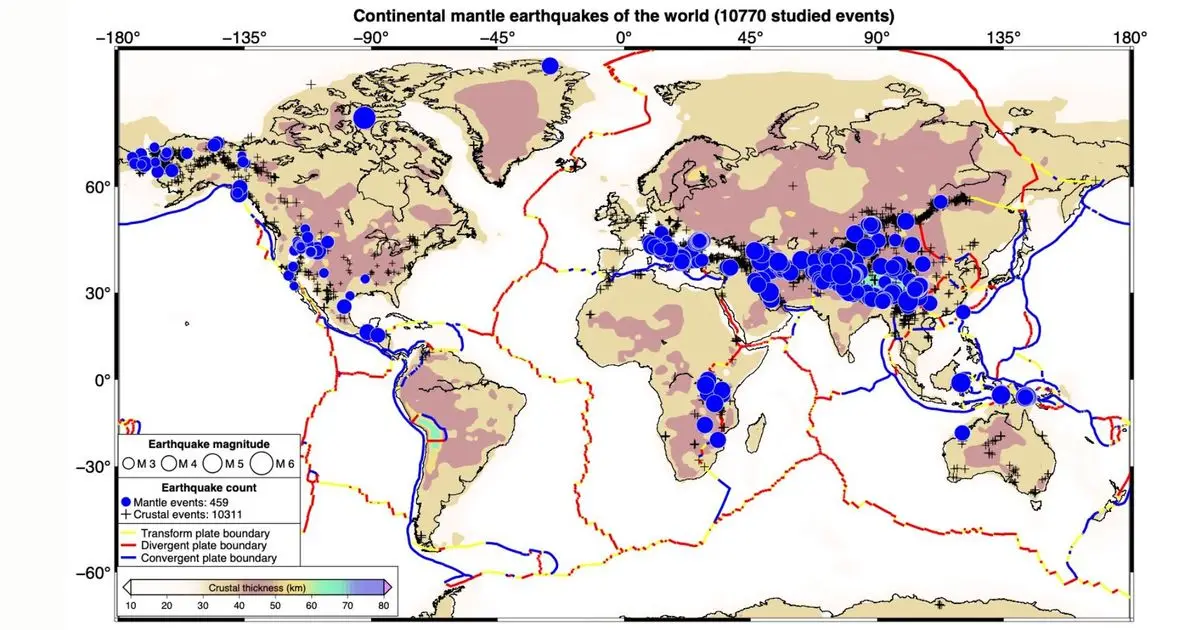
Geophysicists Shiqi (Axel) Wang and Simon Klemperer developed a new method to precisely determine whether an earthquake originated in the crust or the mantle. Applying it to 35 years of data, they found 459 confirmed mantle earthquakes worldwide.
Earth’s Mantle — a layer of hot, semi-solid rock between the crust and the molten core. About 2,900 km thick, it comprises roughly 84% of Earth’s total volume.
Mohorovicic Discontinuity (Moho) — the boundary between Earth’s crust and mantle. Named after Croatian seismologist Andrija Mohorovicic, who discovered it in 1909. Depth: 10-70 km depending on location.
How It Works
The key insight is comparing two types of seismic waves that behave differently in the crust and mantle:
Sn waves (or «lid» waves) — shear waves that travel across the top of the mantle, known as the «lid.» If an earthquake originated in the mantle, Sn waves will be strong.
Lg waves — high-frequency undulations that bounce around easily within the crust. If the earthquake is crustal, Lg waves will dominate.
Seismic waves — vibrations that propagate through Earth from an earthquake’s epicenter. The planet resonates like a bell — and the character of that ring reveals where the strike came from.
The ratio of Sn to Lg amplitudes unambiguously indicates the origin of a quake. The beauty of the method is that it doesn’t require knowledge of exact crustal thickness at a specific location — previous approaches depended on this and therefore only worked locally.
«Our approach is a complete game-changer because now you can actually identify a mantle earthquake purely based on the waveforms of earthquakes, ” says Wang.
Results
From an initial pool of 46,000 earthquakes, the researchers identified 459 confirmed mantle events since 1990. Key findings:
The Himalayan Belt — the most active zone for mantle quakes. Here, the Indian plate forces its way under Asia, generating earthquakes not only in the crust but deeper as well.
The Bering Strait — a surprising concentration of mantle quakes between Asia and North America, south of the Arctic Circle.
The Alpine-Himalayan Belt — a dense band of mantle earthquakes stretches from the Alps across southern Eurasia to the Himalayas.
East Africa — another cluster linked to the East African Rift, where the continental crust is tearing apart.
Western United States and Baffin Bay (Canada) — quakes in locations where none had been found before.
The authors emphasize that 459 is a conservative estimate. Expanding seismic sensor networks, especially in remote areas like the Tibetan Plateau, would likely reveal many more events.
Why Does the Mantle «Crack» at All?
This is one of the main open questions. Mantle earthquakes occur roughly 100 times less frequently than crustal ones, and the mechanisms behind them aren’t fully understood. Scientists are considering several hypotheses:
- Aftershocks from crustal earthquakes — seismic waves from a powerful crustal quake can «descend» and trigger a rupture in the mantle.
- Thermal convection — mantle material movement during recycling of subducted plates may create local stress zones.
- Interconnected seismic cycle — mantle and crustal earthquakes may be part of a unified system where one type feeds the other.
«Continental mantle earthquakes might be part of an inherently interconnected earthquake cycle, both from the crust and also the upper mantle, ” says Wang. „We want to understand how these layers of our world function as a whole system.“
Critical Analysis
The paper has been peer-reviewed and published in Science (Vol. 391, Issue 6785, February 2026).
Strengths:
- The first-ever global catalog of mantle earthquakes — prior data was fragmented and local
- The Sn/Lg method doesn’t require prior knowledge of crustal thickness, making it universal and scalable
- Publication in Science — one of the two most prestigious scientific journals in the world — confirms rigorous peer review
Limitations:
- 459 events is a self-described conservative estimate, dependent on seismic station density. Many events may have been missed in poorly covered regions (Tibet, Central Africa, Siberia)
- The Sn/Lg method hasn’t yet been independently validated by other research groups — the paper is too recent (February 2026)
- Exact depths of mantle earthquakes and specific triggering mechanisms remain unresolved
Open Questions:
- What exactly causes ruptures in the hot, plastic mantle? How deep can they occur?
- Is there a relationship between mantle and crustal earthquakes — could one predict the other?
Conclusions
This work overturns assumptions about where earthquakes can happen. Mantle quakes were once considered exotic curiosities or outright impossibilities — now it’s clear they occur worldwide and are possibly ubiquitous.
Practically, this doesn’t yet affect seismic safety: mantle earthquakes are too deep to be felt at the surface. But they open a unique window into understanding our planet’s internal dynamics — and could reshape our models of how and why Earth quakes at all.
As independent expert Vera Schulte-Pelkum from the University of Colorado put it: «I’d love to get an interactive version of these and zoom around.» Scientists get excited too — and that’s always a good sign.
Related Articles

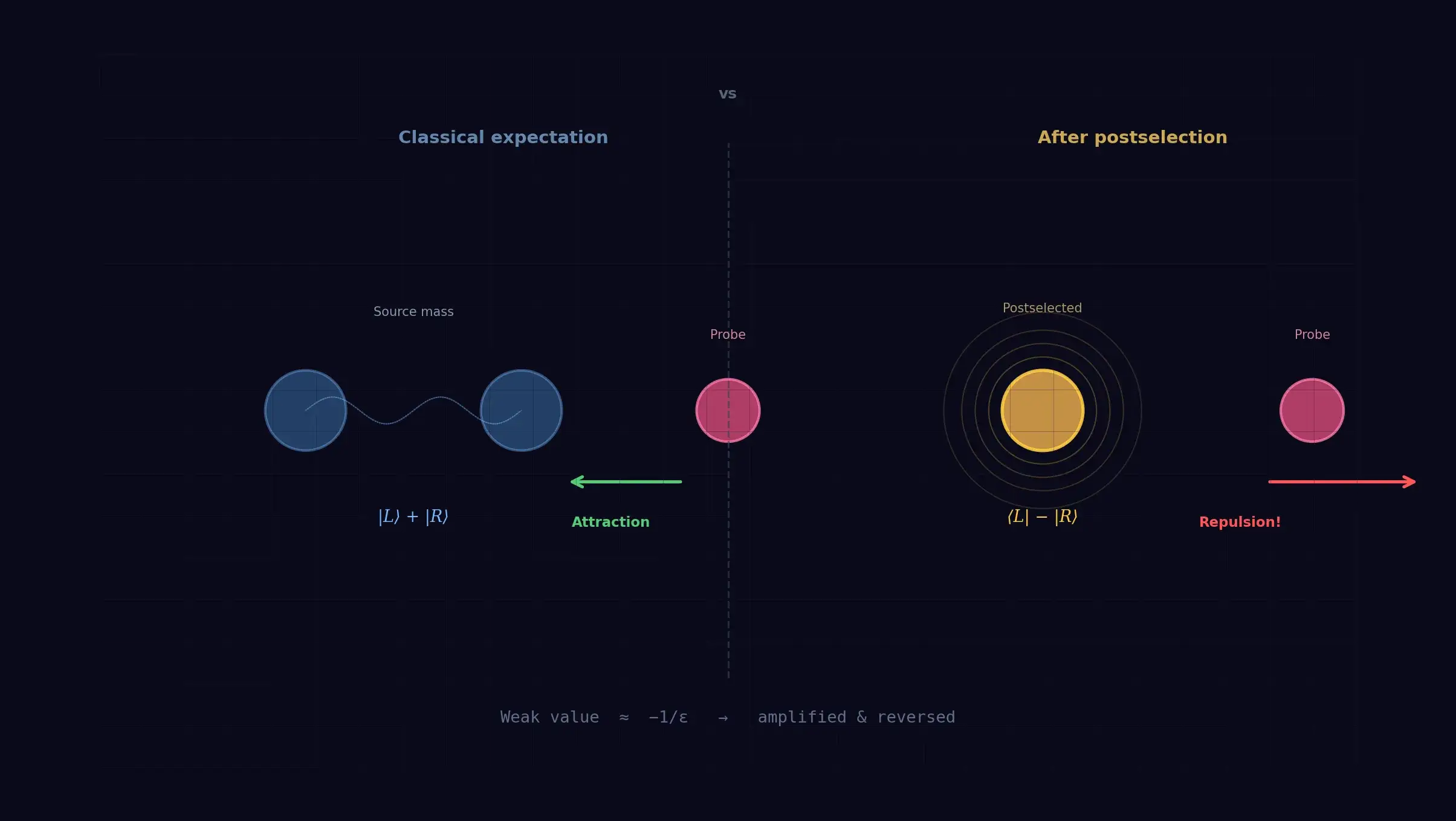
Gravity in Reverse: A Quantum Trick That Repels
Two physicists showed how quantum superposition and clever filtering make gravity push instead of pull. No new physics needed — just quantum weirdness.

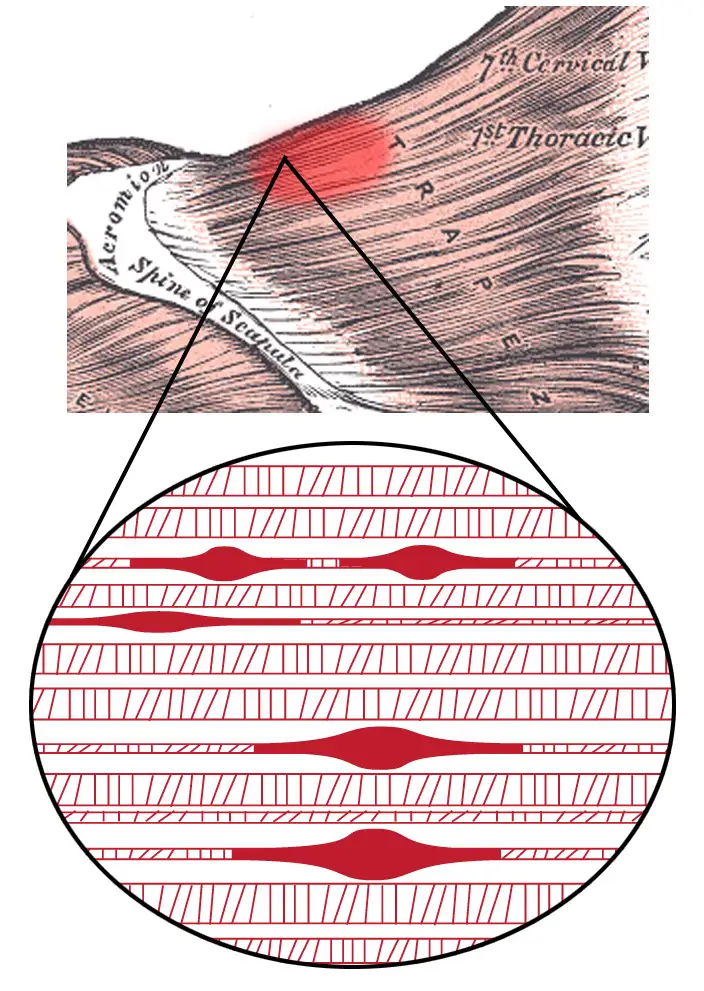
Muscle Knots: 2024 Trigger Point Breakthrough
Why muscle knots form, how they harm your health, and how to treat them — featuring the molecular pathway discovered in 2024.

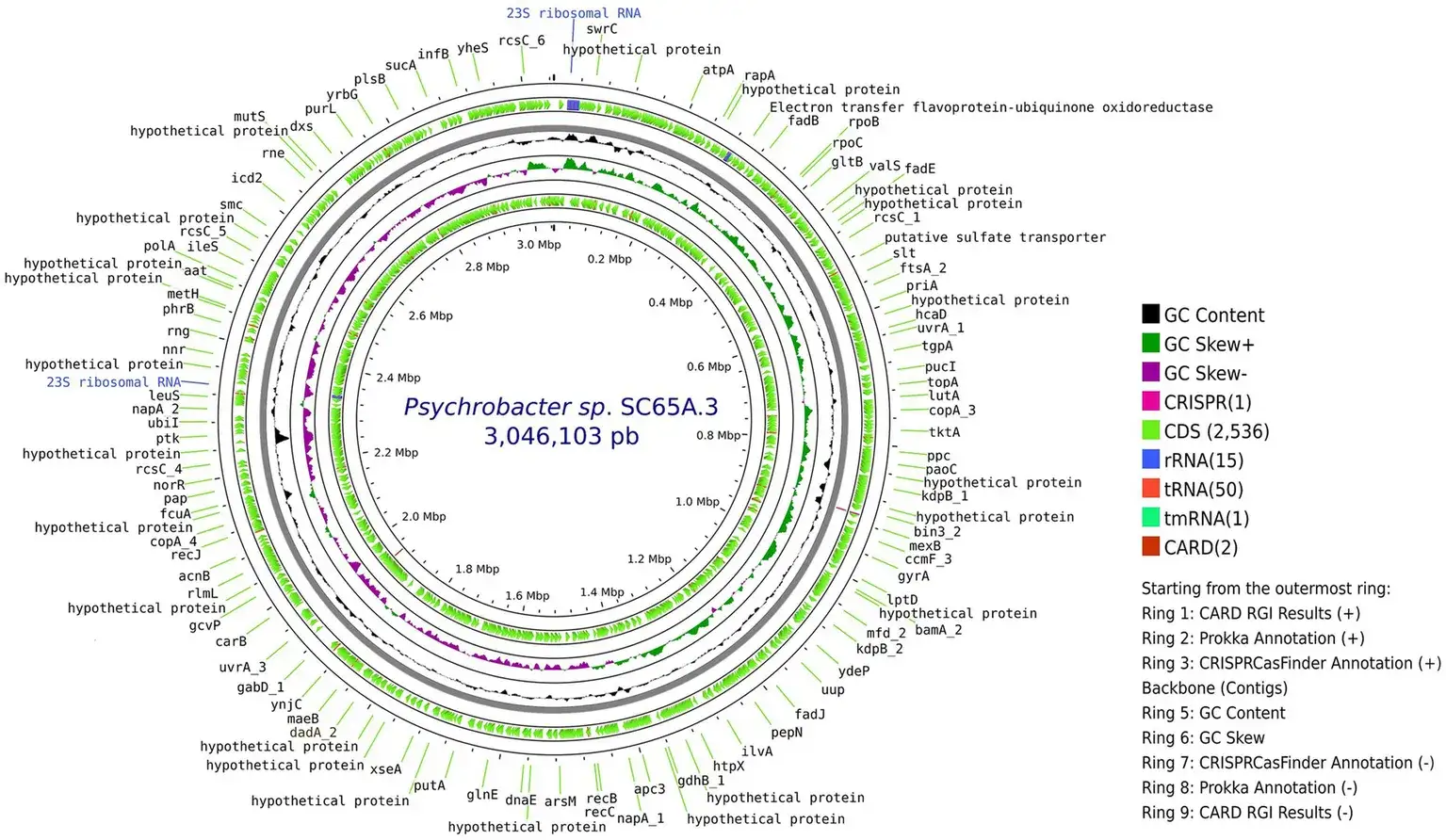
5,000-Year-Old Bacterium Resists 10 Antibiotics
A 5,000-year-old microbe from a Romanian ice cave resists 10 modern antibiotics. Its genes may hold keys to discovering new drugs.