Probiotics That Flush Microplastics: 784 Strains
Authors: Xin Teng, Tengxun Zhang, Chitong Rao

You ate plastic this week. Not a figure of speech — a fact. Current estimates put weekly microplastic intake at 0.1 to 5 grams per person: from bottled water, food packaging, sea salt, seafood, even indoor air. Particles smaller than a single bacterium cross the intestinal wall and end up in blood, liver tissue, and brain. Until recently, once plastic was inside you, it stayed.
A team in Shanghai asked a different question: what if a living microbe could grab the plastic and carry it out? They screened 784 bacterial strains from fermented foods. Two of them turned out to be remarkably good at the job.
The Plastic You Cannot See
Microplastics — synthetic polymer fragments under 5 millimeters — have been found in human blood, placenta, breast milk, and brain tissue. Nanoplastics are smaller still: sub-micrometer particles invisible even under a standard optical microscope.
Microplastics are synthetic polymer particles between 1 micrometer and 5 millimeters. Nanoplastics are smaller than 1 micrometer and can cross cell membranes directly.
Their danger is threefold. They physically damage the gut lining, increasing permeability — the so-called «leaky gut.» They carry surface-bound toxins like phthalates and bisphenols that disrupt hormones. And they shift the microbiome toward inflammatory species, triggering chronic low-grade inflammation. Animal and observational human studies link microplastic accumulation to inflammatory bowel disease and elevated colorectal cancer risk.
The challenge seemed intractable — plastic does not degrade inside the body, we lack the enzymes to break it down, and filtering every sip and every bite is the kind of advice nobody actually follows. A fundamentally different strategy was needed.
Screening at Scale
Researchers at Bluepha, a Shanghai-based biotech company, published their findings in Frontiers in Microbiology. Their approach was brute-force selection: isolate hundreds of lactic acid bacteria from fermented foods, then test each one for its ability to physically bind polystyrene particles.
Adsorption is the process by which molecules or particles stick to the surface of another substance. Here, bacteria literally collect plastic on their outer membrane.
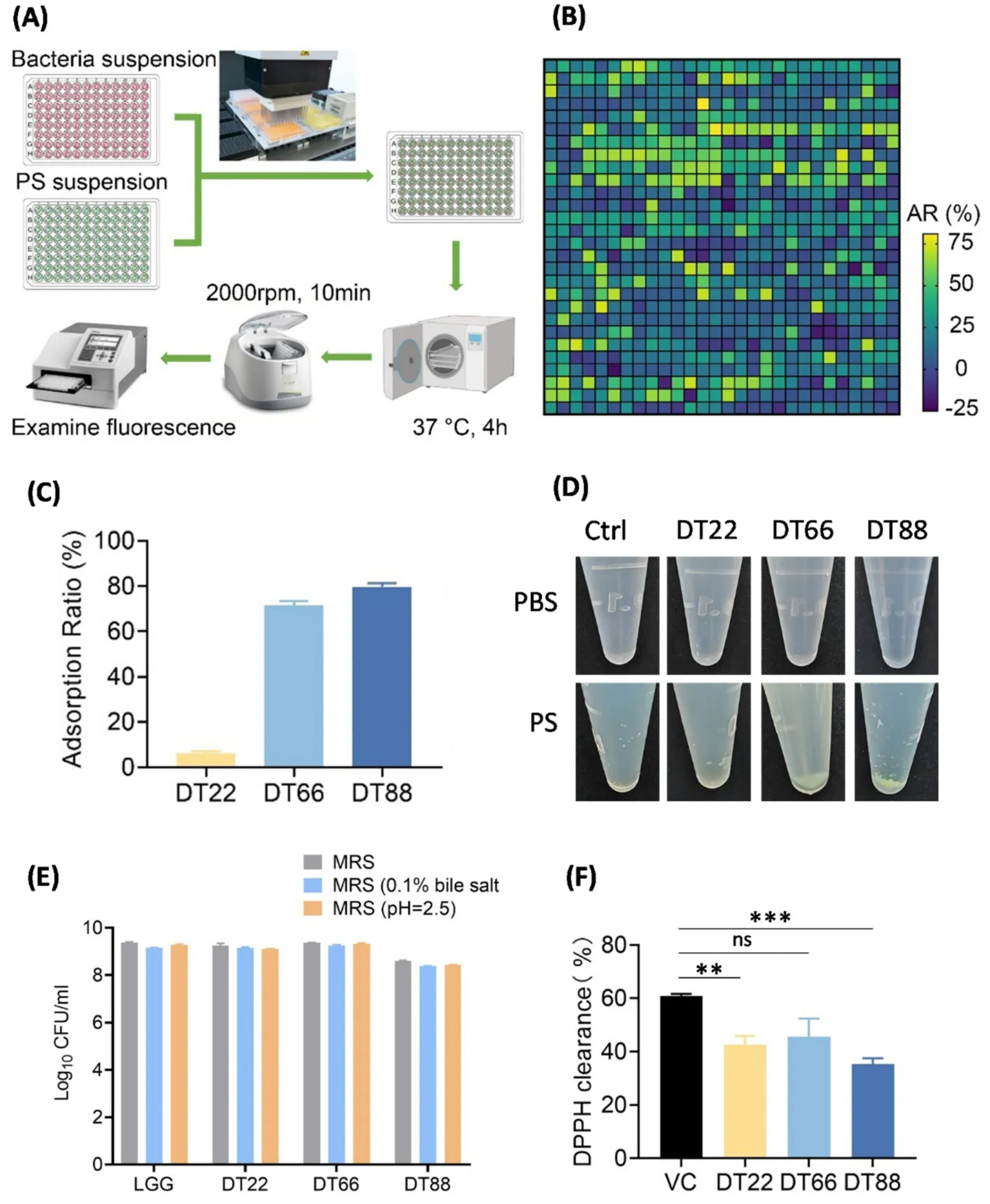
Fig. 1: Screening 784 strains. (A) Experimental setup. (B) Adsorption heatmap — brighter = more plastic bound. © Top performers: DT66 (71.4%) and DT88 (79.8%). Source: Frontiers in Microbiology
Out of 784 strains, two stood out. Lacticaseibacillus paracasei DT66 adsorbed 71,4% of polystyrene particles in vitro. Lactiplantibacillus plantarum DT88 performed even better at 79,8%. Both worked across particle sizes — 5-micrometer beads and 0.1-micrometer nanoplastics alike. Polystyrene was chosen as the test polymer because it dominates disposable food containers, packaging foam, and construction insulation.
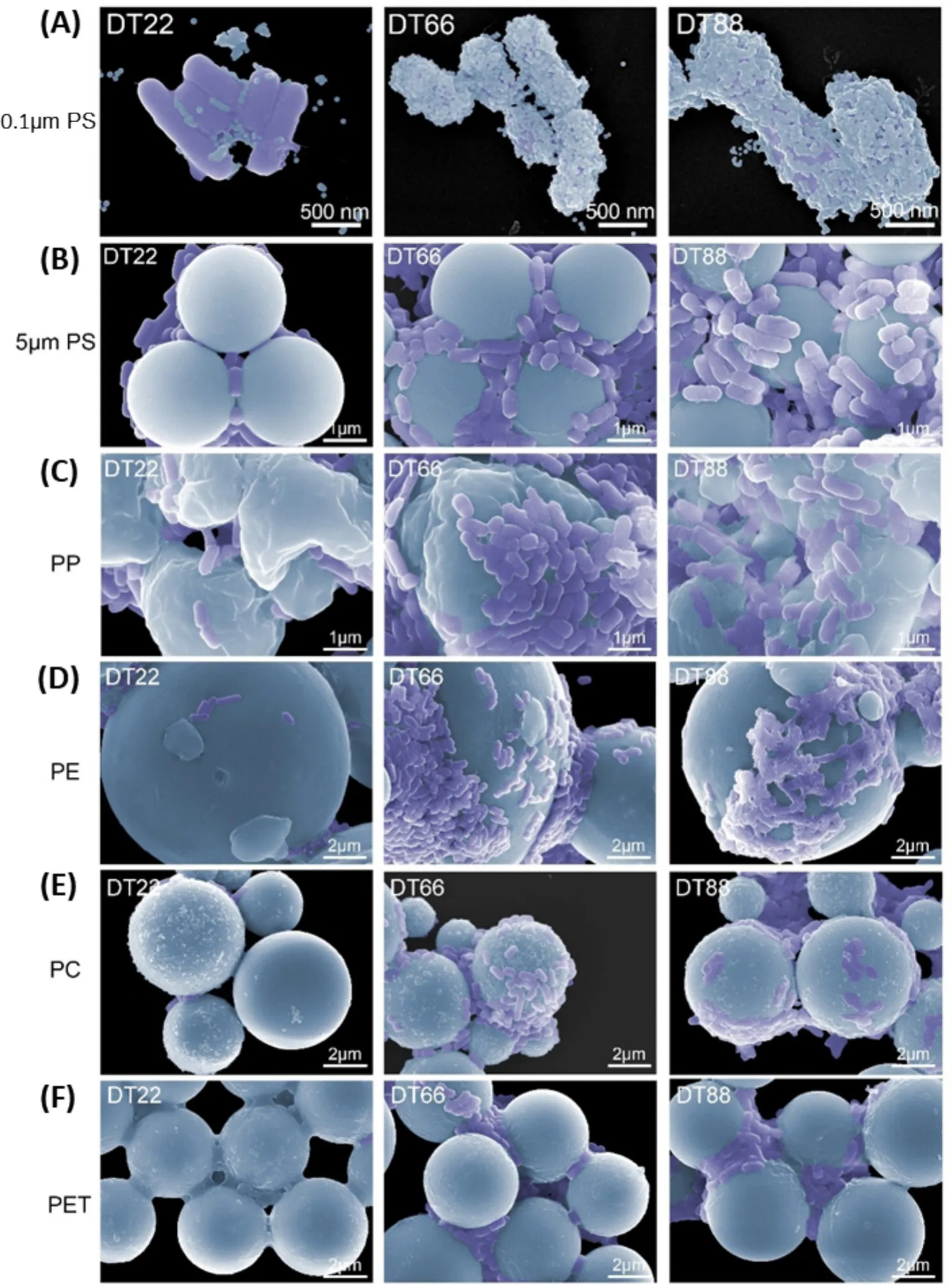
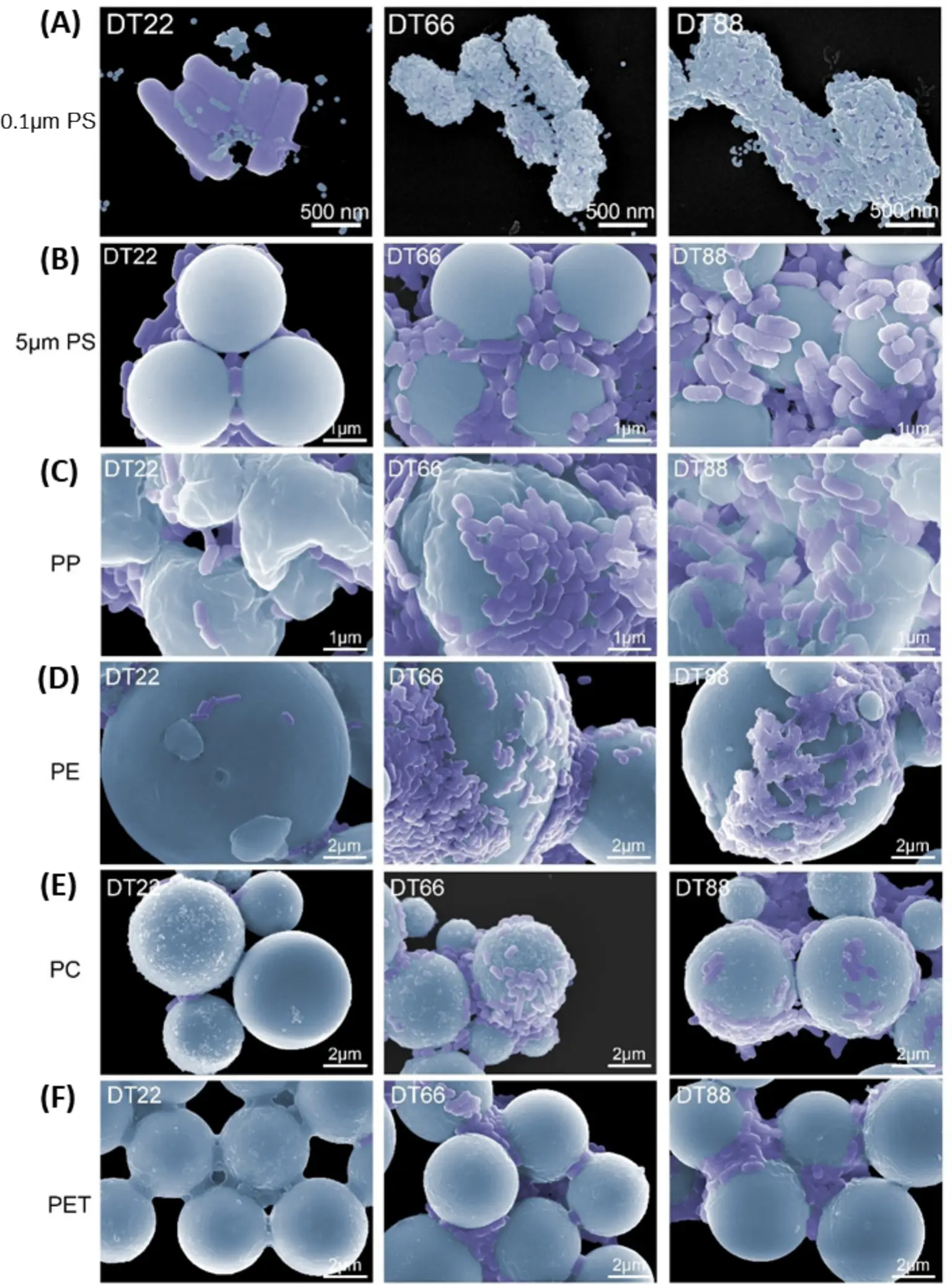
Fig. 2: SEM images of co-aggregates. Bacteria (columns) physically bind to different plastics (rows: 0.1 μm and 5 μm polystyrene, polypropylene, polyethylene, polycarbonate, PET). Source: Frontiers in Microbiology
Inside a Living Gut
A petri dish proves a concept. A mouse proves it can work in a body. The team fed C57 mice probiotics for seven days, then administered polystyrene solution (10 mg/mL, two particle sizes) by oral gavage.
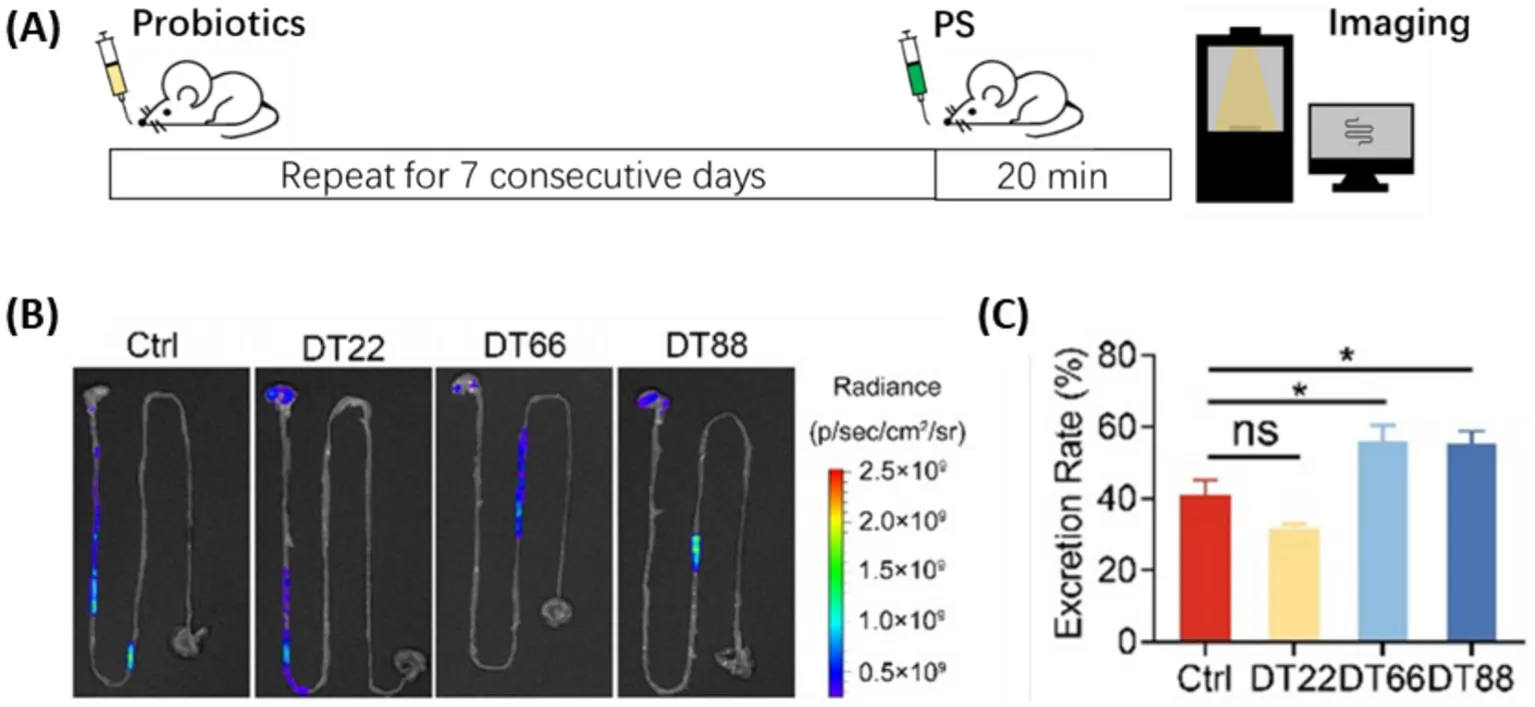
Fig. 3: (A) Mouse experiment timeline. (B) Fluorescence imaging — less glow means less plastic. © Excretion rates: DT66 and DT88 significantly boost polystyrene removal. Source: Frontiers in Microbiology
The numbers were unambiguous. Mice given DT66 or DT88 excreted 34% more polystyrene in their feces than control animals. That means the bacteria were physically capturing plastic inside the gut and shuttling it toward the exit.
Residual plastic told an even clearer story. Polystyrene remaining in the ileum dropped by 61.9–66.8% compared to untreated controls. Total residual plastic across the intestine fell by 67%. Two-thirds of the plastic that would normally stay inside was gone.
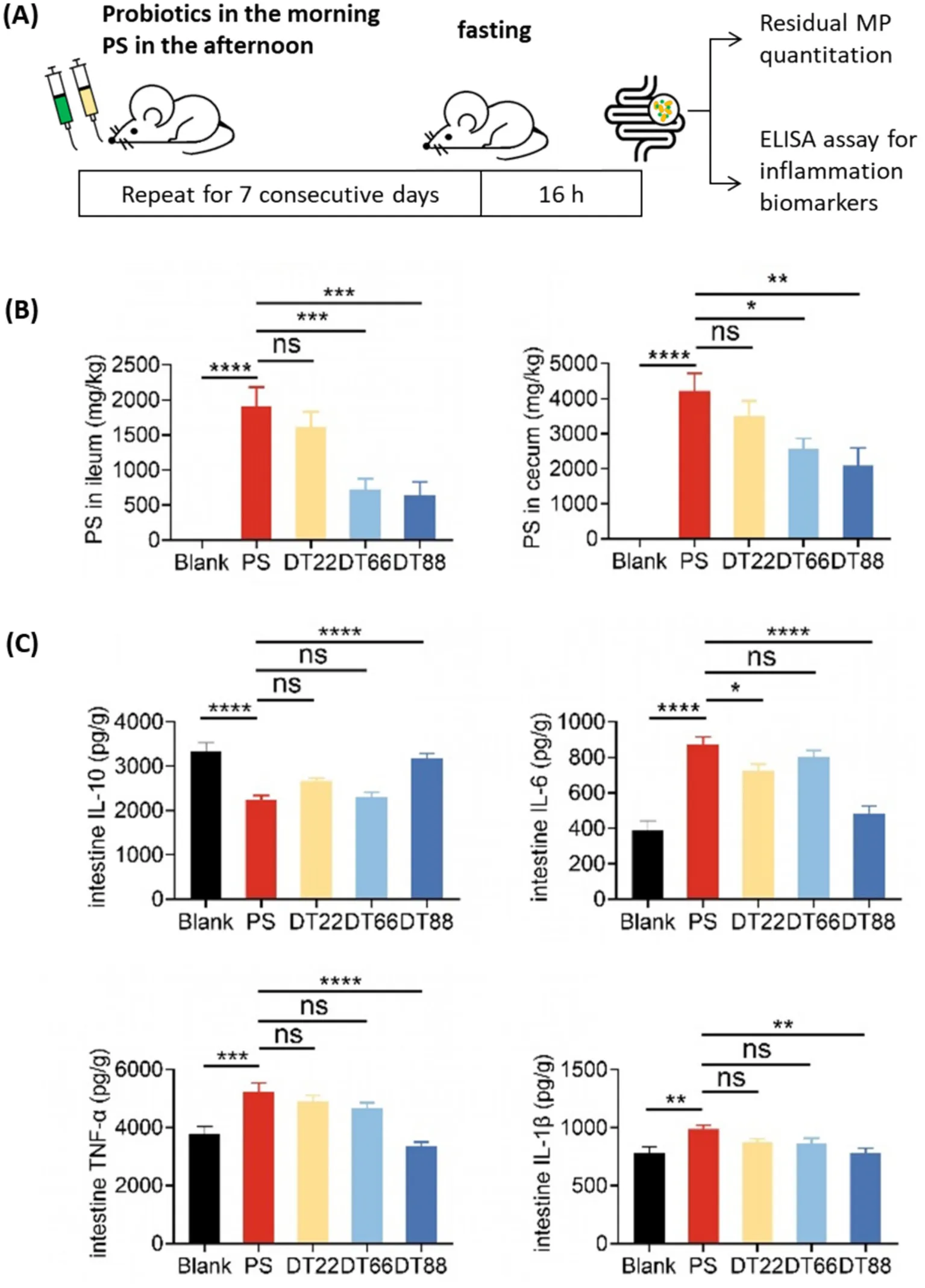
Fig. 4: (B) Residual PS in ileum and cecum — DT66 and DT88 reduce it by 62–67%. © Pro-inflammatory cytokines (IL-6, TNF-α, IL-1β) — DT88 restores them to baseline. Source: Frontiers in Microbiology
Strain DT88 delivered a bonus: it restored pro-inflammatory cytokine levels to baseline. Plastic in the gut triggers inflammation; this bacterium dampened it. A double effect — removing the irritant while calming the irritation.
How a Bacterium Catches Plastic
The mechanism is elegantly simple. These bacteria do not digest plastic — they lack the enzymes for that. Instead, they form co-aggregates: clumps where bacterial cells and polystyrene particles stick together.
Picture a snowball rolling downhill. The bacterium is the snowflake; the plastic particle is the pebble. Alone, the pebble sits still. Wrapped in snow, it rolls. In the gut, peristalsis — the rhythmic muscular contractions that push food along — is the slope. A co-aggregate is too large to cross the intestinal wall and too mobile to lodge in place.
Short-chain fatty acids — small molecules produced when bacteria ferment dietary fiber, essentially fuel for intestinal cells — add a secondary boost. They accelerate gut motility, helping aggregates reach the colon faster.
Between Promise and Proof
The study earns respect and caution in equal measure. The screening scale — 784 strains tested systematically — makes this a deliberate selection, not a lucky find. Both finalists were validated in vitro and in vivo. The effect is quantifiable and reproducible: 34% excretion increase, 67% residual reduction, inflammatory marker normalization.
Yet mice are not humans. Seven days of probiotic intake followed by a single polystyrene dose is a controlled experiment, not a model of decades-long chronic exposure to dozens of polymer types. The team quantified adsorption only for polystyrene; data on polyethylene, polypropylene, and PET — which make up the bulk of food packaging — remain limited. The work was published in Frontiers in Microbiology, a peer-reviewed journal, though independent replication has not yet been reported.
A conceptual question lingers. Where do co-aggregates go after the small intestine? The authors acknowledge that the fate of bacterium-plastic complexes in other organs is unknown. Some aggregates may disassemble in the colon, releasing plastic back into tissue contact. Longer-term studies with chronic exposure protocols will need to address this.
Still, the core principle holds. And its appeal lies in simplicity: no genetic engineering required, no synthetic drugs. An ordinary lactic acid bacterium, a close relative of the microbes already living in yogurt, sauerkraut, and kimchi.
A Fermented Strategy
Does this mean you should eat more kimchi tonight? Not exactly. Strains DT66 and DT88 are research isolates — you cannot buy them at a grocery store. But the direction is set.
Several groups are already developing probiotic formulations specifically for microplastic clearance. If human clinical trials confirm efficacy, such a probiotic could become a daily supplement — like vitamin D in winter. Given that complete avoidance of microplastics is impossible (they are in the air you breathe), the strategy of «accept and expel» may prove more practical than «avoid entirely.»
Meanwhile, the pragmatic moves remain simple: eat diverse fiber, include fermented foods, swap plastic bottles for glass. Not a revolution — but a reasonable defense.
FAQ
Does eating kimchi actually remove microplastics from the body?
The experiment used specific bacterial strains (DT66 and DT88) isolated from fermented foods, not kimchi as a product. Regular kimchi contains related species, but their plastic-binding capacity has not been tested. Kimchi supports gut microbiome health broadly, yet it is not yet proven as an «anti-plastic» food.
How much microplastic does a person ingest per week?
Estimates vary widely by diet and geography. The commonly cited range is 0.1 to 5 grams per week — roughly the mass of a credit card at the upper end. Major sources include bottled water, packaged food, sea salt, and seafood. Airborne particles add to the total.
Are microplastics in the gut dangerous to health?
Animal studies and human observational data link microplastic accumulation to intestinal barrier damage, microbiome dysbiosis, chronic inflammation, and elevated risk of inflammatory bowel disease. Nanoplastics can enter the bloodstream and reach the liver and brain, amplifying systemic inflammation. However, precise harm thresholds for humans remain undefined.
When will an anti-microplastic probiotic be available?
This is currently at the preclinical stage (mouse experiments). Human clinical trials and regulatory approval are likely years away. However, the field is moving fast, with multiple groups developing probiotic formulations designed to capture and expel microparticles from the gut.
References
Original
Related Articles

Sleep Loss Turns Gut Against Your Brain
Gut bacteria from sleep-deprived mice triggered Alzheimer's-like tau damage in healthy brains. Scientists traced the full molecular chain.

Bacteria That Eat Tumors: Cancer Therapy
Engineers gave Clostridium sporogenes quorum sensing — bacteria find tumors, wait for backup, then destroy cancer from within.

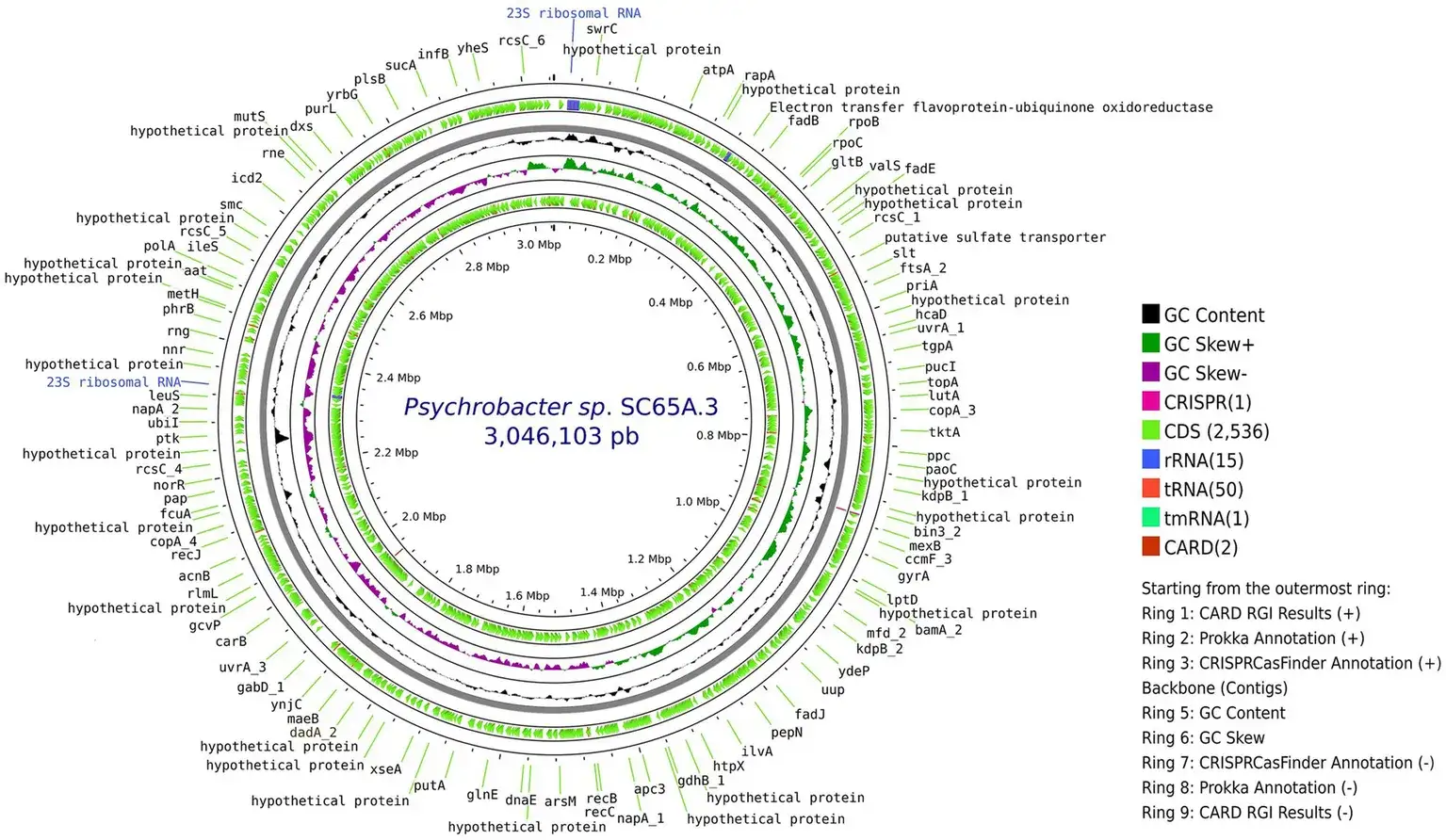
5,000-Year-Old Bacterium Resists 10 Antibiotics
A 5,000-year-old microbe from a Romanian ice cave resists 10 modern antibiotics. Its genes may hold keys to discovering new drugs.