A Scientist Rewarmed His Friend's Brain — Synapses Intact
Authors: Gregory M. Fahy

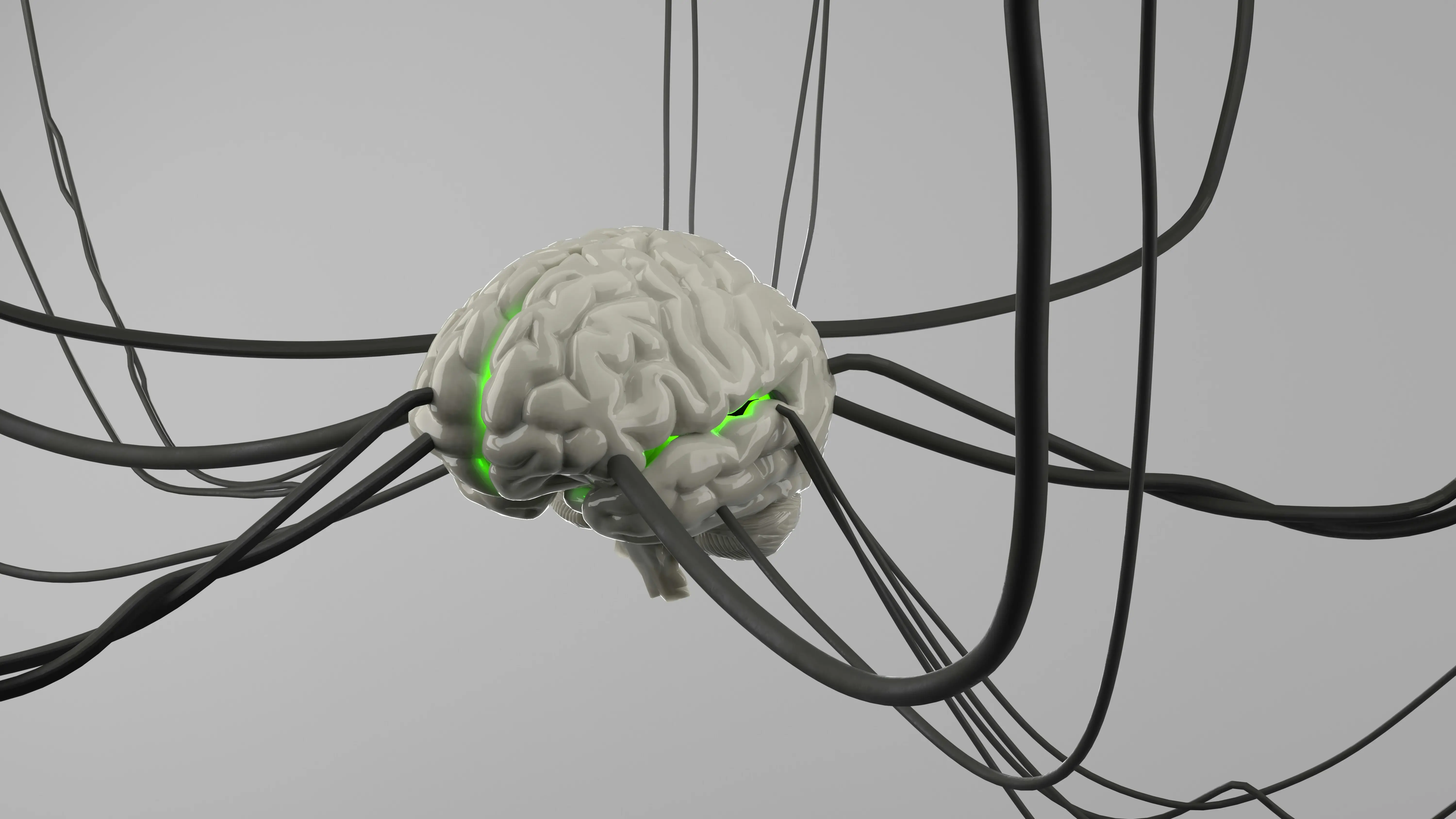
Stephen Coles spent his career studying why some people outlive others. He cofounded the Gerontology Research Group, built registries of supercentenarians, and hunted for the biological machinery of aging. When pancreatic cancer found him in 2014, he made a decision that followed logically from everything he had studied: he asked to have his brain frozen. Ten years later, his friend and colleague Gregory Fahy pulled fragments of that brain from a cryostat — and found the synapses intact.
Glass Instead of Ice
Conventional freezing destroys tissue. Water inside cells crystallizes, crystals shred membranes, and what remains after thawing is mush. Fahy helped pioneer the alternative: vitrification. Tissue is perfused with a specialized cryoprotectant solution (M22) that does not crystallize upon cooling but instead transitions into a glass-like solid. Molecules freeze in place without tearing anything apart.
Vitrification — the transition of a liquid into an amorphous (glass-like) solid state without forming crystals. In cryobiology, this is the key technique: tissue «freezes» but ice never forms, leaving cellular structures undamaged.
Coles became Alcor Life Extension Foundation’s 131st patient. His brain was perfused with M22 through the vasculature, removed from the skull, and placed in a cryostat at −146 °C in Scottsdale, Arizona. It stayed there for roughly a decade.
What the Microscope Revealed
In 2026, Fahy and his team at 21st Century Medicine posted results on bioRxiv from their examination of Coles’s brain fragments. High-resolution electron microscopy showed three things.
First: no ice crystals were detected — not in the human samples and not in parallel animal experiments. Vitrification had worked.
Second: neuropil — the dense mesh of dendrites and axons — was structurally preserved. Synaptic vesicles, cell membranes, core organelles were all present.
Third: cells were heavily dehydrated (M22 draws water out). But when the cryoprotectant was partially washed out, cortical pyramidal neurons recovered their normal shape. The brain had been compressed, not destroyed.
Neuropil — the dense network of neuronal processes (axons and dendrites) between cell bodies. If neuropil is destroyed, information about connections between neurons is lost. Its preservation is the central criterion for any theory of brain «revival.»
Do Not Confuse With Resurrection
A pause is needed here. Preserved synapses do not mean preserved consciousness. Between «structure is intact» and «function is recoverable» lies a distance nobody has crossed. Fahy himself stresses that this is a proof of concept, not a revival protocol.
But the significance lies elsewhere. Until this report, no direct evidence existed that a whole human brain could be vitrified without aldehyde fixation (which kills tissue irreversibly) and still retain ultrastructure. Now that evidence exists.
Separately, in March 2026, another group reported that a mouse brain showed electrical activity after vitrification. The two results together shift cryonics from the realm of science fiction into early experimental science — emphasis on early.
The Osmotic Trap
The main problem Fahy discovered was not ice but the reverse process. When the team tried to fully remove M22 from the tissue (lowering concentration to 1M), cells suffered osmotic shock: water rushed back in too fast. Optimal washout stopped at 3-5M — enough to restore cell shape but not enough for complete clearance.
This is an engineering problem, not a fundamental barrier. The washout protocol can be optimized. But until it is, a «thawed» brain remains saturated with cryoprotectant — and what to do with it next remains unclear.
The work was published as a preprint on bioRxiv (DOI: 10.64898/28.01.2026.702375) and had not undergone formal peer review at the time of publication. The authors have ties to the cryonics industry, which warrants consideration when evaluating the findings.
A Scientist’s Last Will
Stephen Coles could have asked for cremation. Or burial. He chose to become a research subject. His will contained an explicit instruction: study my brain. Ten years in a cryostat — and his colleague honored the request. The synapses were intact. What that means for the future is a question Coles can no longer answer. But he did everything to make an answer possible.
Frequently Asked Questions
Can a frozen brain be «brought back to life»?
Not with current technology. Preserved structure does not imply recoverable function. Synapses are intact, but molecular integrity (proteins, ion channels, neurotransmitters) has not been verified. Between «architecture is in place» and «the brain can operate» lies an unknown number of steps.
How does vitrification differ from regular freezing?
In regular freezing, water inside cells forms ice crystals that tear membranes apart. In vitrification, tissue is perfused with a cryoprotectant (M22) that transitions into a glass-like state upon cooling — no crystals form. Think of it as the difference between a frozen puddle (ice, cracks) and a hard candy (glass, seamless).
How much does brain cryopreservation cost?
Alcor offers two options: whole-body cryopreservation (~$220,000) and brain only (neuropreservation, ~$80,000). Payment is typically arranged through a life insurance policy.
Why does this matter if revival is impossible?
Three reasons. First: proving that brain structure survives opens the door to studying the connectome (wiring map) on real human tissue. Second: vitrification technology applies to organ transplantation — preserving kidneys and hearts for long-term storage. Third: the authors point to potential applications in long-duration space travel.
Who was L. Stephen Coles?
Stephen Coles (1941-2014) was an American biogerontologist who cofounded the Gerontology Research Group and devoted his career to studying longevity. He died of pancreatic cancer and became Alcor’s 131st patient by his own request.
References
Related Articles

Your Brain Literally Naps When You're Bored: EEG Proof
Parts of your brain slip into sleep mode for split seconds during boring tasks. In ADHD brains, these 'flickers' are far more frequent.

Sleep Loss Turns Gut Against Your Brain
Gut bacteria from sleep-deprived mice triggered Alzheimer's-like tau damage in healthy brains. Scientists traced the full molecular chain.

Big Five Personality: 254 Genes Found, Sixth Factor (2025)
Genome study of 600K people found 254 genes shaping personality. A 6th trait beyond Big Five predicts mortality. Seven 2024-2025 studies reviewed.