CO₂ in Your Blood: Why Air Could Turn Toxic by 2076
Authors: Alexander N. Larcombe, Phil N. Bierwirth


Take a breath. The air filling your lungs right now carries 424 parts per million of carbon dioxide. That number means nothing to your conscious mind — but your blood has been tracking it for decades. Two Australian researchers just proved it.
Alexander Larcombe and Phil Bierwirth analyzed over 70,000 blood samples collected across 20 years of the U.S. National Health and Nutrition Examination Survey (NHANES). They plotted serum bicarbonate — the molecule your body uses to carry CO₂ through the bloodstream — against the Mauna Loa atmospheric CO₂ record. The two curves rise in near-perfect parallel. And if the trend holds, blood chemistry will cross the accepted healthy threshold by 2076.
Blood Keeps Score
NHANES is the gold standard for population-level health data in the United States. Every two years, roughly 7,000 randomly selected participants of all ages undergo physical exams and blood work. Among the markers: serum bicarbonate.
Bicarbonate (HCO₃⁻) is how your body transports CO₂ through blood. Inside red blood cells, the enzyme carbonic anhydrase converts dissolved carbon dioxide into hydrogen ions and bicarbonate. Higher atmospheric CO₂ means more dissolved gas in blood — and more bicarbonate to carry it.
A Yale team first spotted the pattern in 2014: from 1999 to 2012, average bicarbonate climbed roughly 5%, from 23.8 to 25.0 mEq/L. Larcombe and Bierwirth extended the dataset through 2020, adding four more NHANES cycles. The trajectory didn’t flatten. It steepened. The latest reading: 25.3 mEq/L. Growth rate: 0,34% per year.


Two other markers moved in the opposite direction. Serum calcium fell 2%. Phosphorus dropped 7%. Both declines tracked the same 20-year window.
The upper limit of healthy venous bicarbonate is 30 mEq/L. At the current linear rate, that boundary gets crossed in 2076. Calcium and phosphorus hit their lower limits by 2085 and 2099.
800,000 Years of Calibration — Then a Spike


Human respiratory physiology evolved under atmospheric CO₂ of roughly 280 ppm. Antarctic ice cores preserve trapped air spanning 800 millennia. Throughout that entire record, carbon dioxide oscillated between 180 and 300 ppm. Chemoreceptors, blood buffers, renal acid handling — every regulatory mechanism was tuned to that corridor.
By 1980, atmospheric CO₂ had reached 340 ppm. Today it sits at 424 ppm, climbing more than 2 ppm annually. Every breath you draw contains 50% more carbon dioxide than the air your ancestors breathed just two centuries ago. Evolution cannot keep pace.
The Body’s Emergency Buffer
The mechanism Larcombe and Bierwirth describe works like a cascade. Extra CO₂ enters blood through the lungs. Carbonic anhydrase splits it into bicarbonate and hydrogen ions. The hydrogen ions lower blood pH — respiratory acidosis begins. The body activates compensation.
Respiratory acidosis occurs when excess CO₂ drops blood pH. In chronic exposure, kidneys retain bicarbonate and excrete acid; bones release calcium and phosphate to neutralize the shift. This buffering system works — until demand outstrips capacity.
That is why calcium and phosphorus decline. Bones serve as a chemical reserve: they sacrifice minerals to stabilize pH. The process is invisible and gradual — but over two decades, it accumulates into a statistically significant population-wide signal.
Here is the trap: the lungs cannot simply exhale harder. Ventilation responds to pH, and pH gets stabilized by buffers. The more CO₂ is neutralized by bicarbonate, the weaker the drive to breathe faster. The body adapts, but at the cost of a chemical shift that compounds year after year.
When Walls Turn Against You
Outdoor 424 ppm is the baseline. The actual concentrations your body faces indoors are far higher. Americans spend 87% of their time inside buildings. A closed office typically runs 1,000–2,000 ppm. A packed meeting room can hit 3,000 ppm. A bedroom with a shut door easily reaches 1,500 ppm by morning.
A 2025 study at Masaryk University tested students in classrooms with varying CO₂. Elevated carbon dioxide impaired working memory and fluid intelligence. Fine particulate matter (PM2.5) showed no comparable effect. The culprit was the gas itself.
A 2020 analysis in GeoHealth warned that rising background CO₂ lifts the indoor floor. Concentration levels already linked to cognitive impairment could become the default in ordinary rooms — not a century from now, but within the lifetimes of children born today.
Brain Fog, Anxiety, and Dissolving Bones
What happens once bicarbonate breaches the 30 mEq/L line? Larcombe and Bierwirth assembled evidence from several converging research threads.
Cognition takes the first hit. Controlled experiments show measurable declines in decision-making and planning at just 1,000 ppm. At 2,500 ppm, performance drops sharply. The pathway involves shifts in brain tissue pH, altered cerebral blood flow, and disrupted neuronal excitability through rising extracellular calcium.
Anxiety may creep upward without anyone noticing. CO₂ sensitivity is one of biology’s oldest alarm systems. Its distribution in the population is continuous — some people react strongly, others barely at all. A small increase in ambient CO₂ shifts the entire curve, expanding the fraction experiencing subclinical anxiety. Animal studies at 700–1,000 ppm have documented elevated stress hormones.
Bones lose mineral reserves. Chronic mild acidosis forces them to continuously release calcium and phosphate. Not a fracture — decades of silent demineralization. Meanwhile, excess calcium carbonate deposits in kidney tissue. Guinea pigs developed renal calcification at 1,500 ppm within six to fifteen weeks.
Protein folding may go wrong. A 2020 hypothesis by Duarte and colleagues proposes that chronically elevated CO₂ disrupts the proteome. Altered pH shifts charge distributions on proteins, leading to misfolding and endoplasmic reticulum stress. If confirmed, this mechanism could partly explain rising rates of diabetes and neurodegeneration — but it remains a hypothesis for now, not established fact.
Between Correlation and Catastrophe
The study was published in the peer-reviewed journal Air Quality, Atmosphere & Health (Springer Nature, February 26, 2026) under an open-access CC BY 4.0 license.
Before drawing conclusions — and the Reddit thread with 12,900 upvotes has already been called «the most alarming paper this month» — the weaknesses deserve careful examination.
The central vulnerability is ecological correlation. The authors compare two rising trends: atmospheric CO₂ and blood bicarbonate. Both climb — but over the same 20 years, the United States also saw increases in obesity prevalence, diuretic prescriptions, and chronic kidney disease. Any of these factors can push bicarbonate higher. NHANES does not include arterial partial pressure of CO₂ or blood pH measurements, making it impossible to prove that the bicarbonate rise stems from atmospheric hypercapnia rather than metabolic shifts.
Respiratory physiologists raise another objection: the lungs regulate arterial pCO₂ with remarkable efficiency through ventilation. The jump from 380 to 424 ppm outdoors is physiologically tiny; a meaningful shift in arterial pCO₂ typically requires sustained exposure above 1,000 ppm.
Yet the paper asks a question that no one has systematically addressed: what does lifelong exposure to slowly rising CO₂ do to a healthy population across decades? The evolutionary argument holds — our physiology was calibrated for 280 ppm, and we already live at 424. The NHANES trends, whatever their confounders, are real and demand explanation.
The most likely picture sits somewhere between alarm and dismissal: atmospheric CO₂ is one of several forces reshaping blood chemistry, and its contribution will grow with each passing decade — especially when combined with poor indoor ventilation.
The Countdown
2076 is not a doomsday date. It is a point on a graph where average blood bicarbonate crosses the accepted healthy range. What follows depends on how seriously we treat these numbers now.
Larcombe and Bierwirth call for three things: aggressive emission cuts, better building ventilation, and — most critically — large-scale studies of chronic low-level CO₂ exposure on human physiology. While we argue over climate models, blood chemistry is already telling its own story. Quietly, but in numbers.
Reader Questions
Why is high bicarbonate dangerous?
Elevated bicarbonate signals compensated acidosis — the body holds pH steady by overloading its buffer systems. Sustained levels above normal are linked to kidney dysfunction, bone demineralization, cognitive impairment, and cardiovascular risk. This is not an acute emergency but a slow shift stretched across decades.
Can I check my own levels?
Bicarbonate (sometimes labeled «total CO₂») is part of a standard metabolic blood panel available at most labs. The normal venous range is 22–30 mEq/L. Consistently elevated readings above 28 warrant a conversation with your doctor, especially if you have chronic lung or kidney conditions.
Does opening a window help?
Ventilation drops indoor CO₂ from a typical 1,000–2,000 ppm down toward outdoor levels (about 424 ppm). It does not solve the global problem, but it materially reduces daily physiological load. Indoor CO₂ monitors cost $30–50 and provide real-time air quality feedback.
Why don’t we feel it?
Humans lack sensory receptors that fire below roughly 2,000 ppm CO₂. Mild acidosis and subtle cognitive decline are invisible to subjective experience but measurable in testing. The analogy is high blood pressure: it does not hurt, but it damages vessels over years.
How much time do we have?
At the current trajectory: blood bicarbonate breaches the upper healthy limit around 2076; calcium and phosphorus cross their lower limits by 2085 and 2099. These are linear extrapolations with substantial uncertainty. The actual path depends on emission reduction rates, building ventilation standards, and individual physiology.
References
Related
- Direct human health risks of increased atmospheric carbon dioxide (Jacobson et al., Nature Sustainability, 2019)
- Fossil Fuel Combustion Is Driving Indoor CO₂ Toward Levels Harmful to Human Cognition (GeoHealth, 2020)
- Indoor CO₂ concentrations and cognitive function: A critical review (Du et al., 2020)
Related Articles

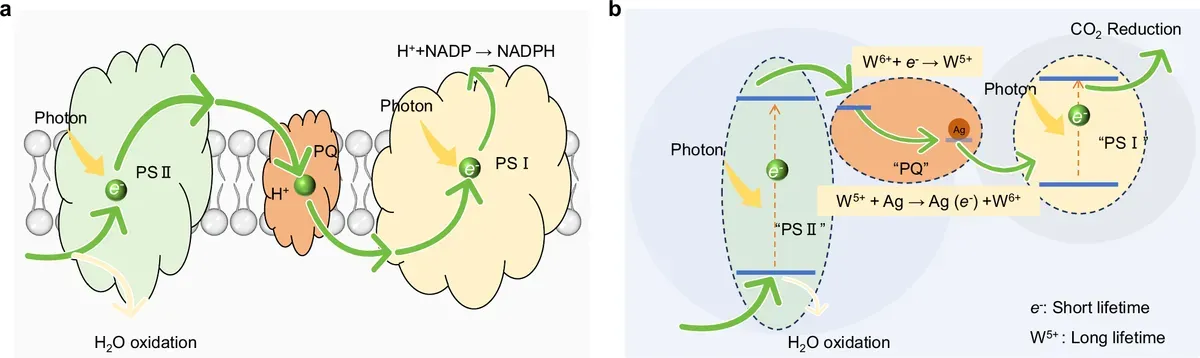
A Tungsten Charge Battery Turns CO₂ and Sunlight into Fuel
A tungsten-based photocatalyst converts CO₂ and water into fuel using only sunlight — mimicking photosynthesis at room temperature.

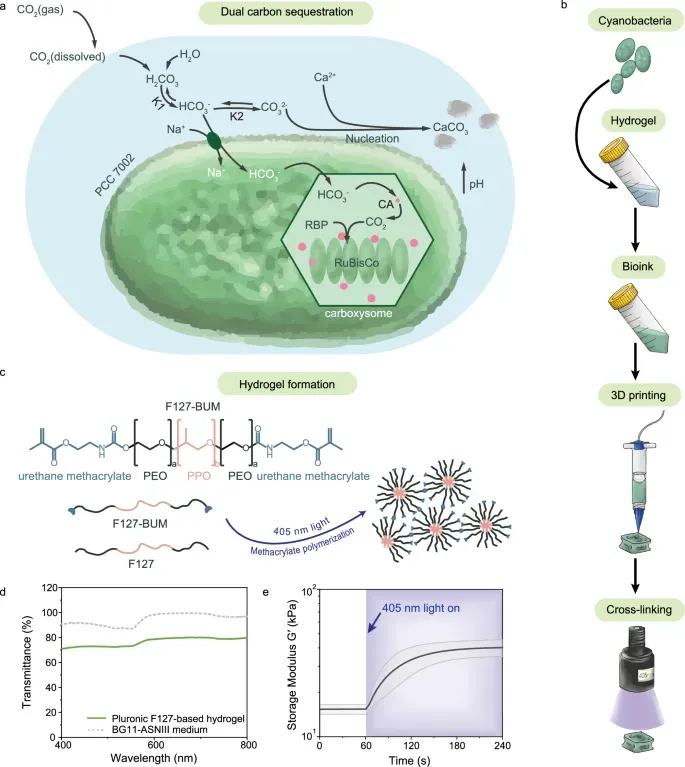
Living Buildings: 3D-Printed Hydrogel with Bacteria Captures CO₂
ETH Zurich engineers created a 3D-printable hydrogel with cyanobacteria that captures carbon dioxide through dual mechanisms — photosynthesis and carbonate mineralization.


Coffee vs. Dementia: Harvard Tracked 132,000 People for 40 Years
The largest observational study of its kind in JAMA: 2–3 cups of coffee or 1–2 cups of tea per day linked to 18% lower dementia risk. Decaf showed no benefit — and that tells us something important.