BYD Blade 2.0: Full Charge in 9 Minutes, 1000 km Range
Authors: Science Blog

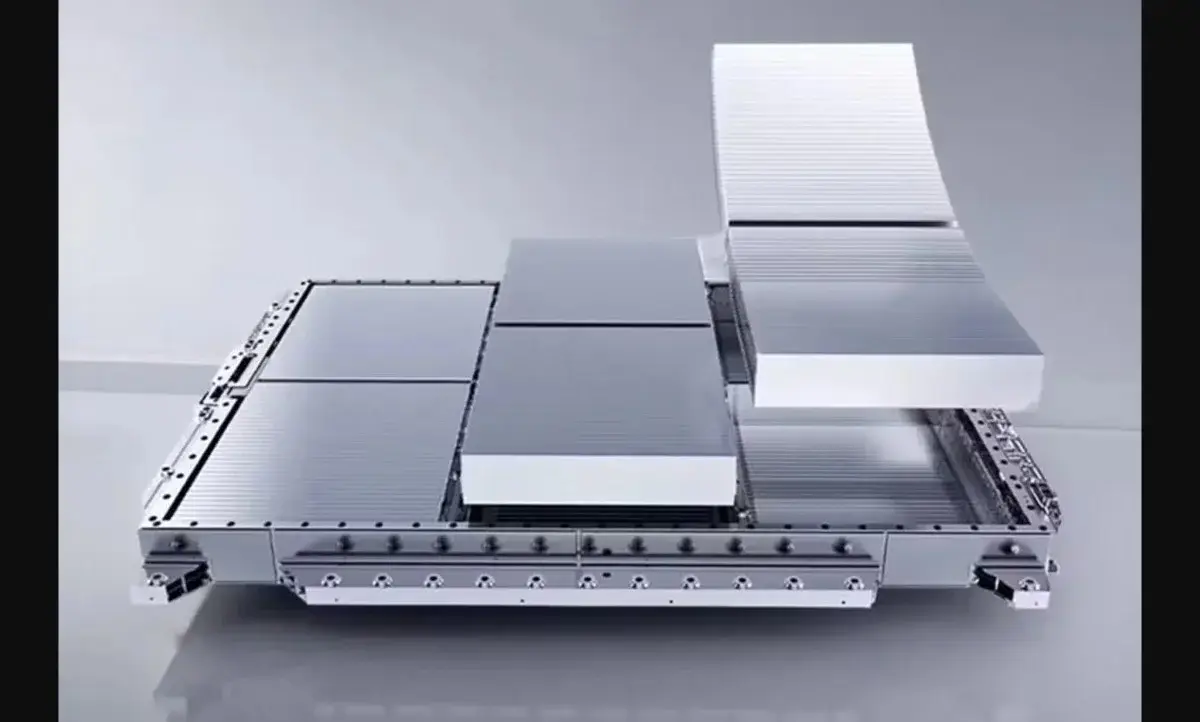
A gas station stop lasts about five minutes. An EV charging stop? Forty-five, if you’re lucky. On March 5, 2026, BYD CEO Wang Chuanfu walked onto a stage in Shenzhen and declared that gap closed. The company’s second-generation Blade Battery charges from 10% to 97% in nine minutes — not in a lab prototype, but in ten production vehicles already rolling off the assembly line.
During the live demo, a Denza Z9GT pulled in at 9% battery. Nine minutes and fifty-one seconds later it showed 97% charge and a range estimate of 1,008 kilometers on the dash.
A Decade of Shrinking Wait Times
To appreciate what BYD just did, consider where EV charging was a decade ago. The original Nissan Leaf topped out at roughly 50 kilowatts — a full charge took over an hour. Tesla’s first Superchargers doubled that, but you still planned your road trip around charging stops. Hyundai’s 800-volt Ioniq 5 pushed peak power to 250 kW. Porsche hit 320 kW. BMW’s Neue Klasse architecture reached beyond 400 kW.
Then the numbers started accelerating. In 2024 CATL crammed 550 kW into the Li Mega. Last year BYD’s first-generation Flash Charger broke the megawatt barrier. Now Blade 2.0 doubles down: 1,500 kilowatts — 1.5 megawatts — flowing into a single car. The charging cable hangs from an overhead rail because at this power level it needs active liquid cooling, and the cooled cable is too heavy to hold comfortably.
Cell-to-Pack (CtP) — a battery architecture that skips the intermediate module step. Individual cells are assembled directly into the pack, saving weight and space.
Chemistry Inside the Blade
The original Blade Battery, launched in 2020, made its name with LFP chemistry — lithium iron phosphate. LFP cells are cheaper and safer than the nickel-manganese-cobalt (NMC) cells used by most competitors, but they’ve historically stored less energy per kilogram and charged more slowly. Blade 2.0 changes the equation by switching to LMFP.
LMFP (lithium-manganese-iron-phosphate) — an evolution of LFP that adds manganese to the cathode material. The extra element raises the average cell voltage from about 3.2 V to 3.5 V, which translates to more energy stored per kilogram without sacrificing the thermal stability that makes LFP safe.
The cells themselves keep the distinctive blade shape — long, thin prismatic slabs arranged lengthwise inside the pack. In the first generation the blades sat across the pack’s width. Now they run longitudinally, and the whole assembly doubles as part of the car’s structural floor. No modules. No wasted space. Energy density at the cell level lands between 190 and 210 Wh/kg — a modest 5% bump over Gen 1, but BYD’s engineers clearly bet on charging speed over raw density.
How does an iron-phosphate battery accept 1.5 megawatts without catching fire? Three things work together. First, the 1,000-volt pack architecture keeps current manageable: at the same power level, doubling voltage halves current, and lower current means less heat. Second, BYD uses what the academic literature calls a dual-gradient anode structure — layers engineered to shepherd lithium ions into the graphite faster, preventing the metallic lithium plating that kills cells during aggressive charging. Third, the pack’s thermal management keeps individual cells within a narrow temperature band even at charge rates north of 10 °C.
C-rate — a measure of charging speed relative to battery capacity. 1 °C means charging the full capacity in one hour; 10 °C means doing it in six minutes.
What the Numbers Actually Mean
BYD quotes up to 1,036 km of range on a single charge for the Denza Z9GT. That number uses China’s CLTC testing cycle, which is notoriously generous — it measures range at low speeds, with climate control off. Converting to the stricter EPA standard cuts roughly 25-30%, landing real-world range somewhere around 720-800 km.
Even the conservative figure represents a genuine leap. Most long-range EVs on sale today top out at 450-550 km of real driving. Blade 2.0 adds another 200 km or so, which functionally eliminates range anxiety for all but the most extreme road trips. And that battery will degrade gracefully: LFP cells historically retain about 80% capacity after ten years of use and around 65% at twenty years. A 720 km battery that fades to 470 km over two decades still covers more ground than most cars sold in 2025.
The nine-minute figure comes with its own fine print. It requires one of BYD’s proprietary Flash Charger stations, rated at 1,500 kW and 1,000 volts. The fastest public chargers in Europe and North America today cap out at 350-400 kW, which means Blade 2.0 owners outside China will charge significantly slower until infrastructure catches up. BYD plans to build 20,000 Flash Charger stations across China by the end of 2026 — 18,000 integrated into existing stations, 2,000 along highways spaced every 100 km. As of March 2026, 4,239 are already operational.
Cold weather adds another caveat. At minus 30 degrees Celsius, charging from 20% to 97% takes about twelve minutes instead of nine — a 33% penalty. For an LFP battery, that performance in Arctic conditions is exceptional, but the gap exists.
These specifications come from BYD’s own presentation and live demo; independent third-party verification has not yet been published.
The Hidden Engineering of Flash Charger Stations
The station itself solves a problem most people don’t think about. Pulling 1.5 megawatts from the grid for nine minutes is the electrical equivalent of powering a small factory. Do that with ten cars simultaneously and the local grid buckles.
BYD’s solution: every Flash Charger station contains its own buffer battery. The station draws a modest 120 kW from the grid continuously, slowly filling its internal storage. When a car plugs in, the buffer unleashes its stored energy at the full 1,500 kW rate. Wang Chuanfu compared the installation to putting in an air conditioner — the grid connection requirements are manageable because the peak demand is handled locally.
This «station-within-a-station» architecture means Flash Chargers can be installed at existing gas stations, shopping malls, or highway rest stops without expensive grid upgrades. The trade-off is throughput: after one or two back-to-back fast charges, the buffer needs time to refill. For a highway station serving dozens of cars per hour, BYD will likely need larger buffers or faster grid connections.
What Stays Unresolved
Blade 2.0 is a production reality, not a concept — ten BYD models ship with it starting in 2026, at prices between roughly $20,000 and $80,000. The technology is mature enough for a lifetime warranty on the cells. But the gap between China’s charging ecosystem and the rest of the world remains wide. European and American networks are still testing 1,000 kW chargers; 1,500 kW stations are years away from widespread deployment outside China.
The bigger question is whether this forces the entire industry’s hand. Tesla, CATL, and Samsung SDI are all developing their own ultra-fast charging solutions. If BYD’s customers get used to nine-minute stops, the benchmark for every other automaker just changed. The EV charging experience is no longer about «how long can you tolerate waiting.» It’s about matching the gas station.
Frequently Asked Questions
Why does it charge to 97% instead of 100%?
BYD intentionally reserves the top 3% of capacity for regenerative braking. When you lift off the accelerator or brake, the motor acts as a generator and pushes energy back into the battery. Leaving a small buffer at the top ensures the battery can always accept that recovered energy, which improves efficiency and extends cell life.
What is the realistic range — not the Chinese test cycle number?
BYD quotes up to 1,036 km using the CLTC standard, which tests at low speeds with climate control off. Converting to EPA-equivalent conditions — highway speeds, heating or cooling active — brings the number to approximately 720-800 km. Even at the lower end, that exceeds most competing EVs by 200+ km.
Can I get 9-minute charging at home?
No. The nine-minute figure requires a 1,500 kW Flash Charger station. A typical home Level 2 charger delivers 7-22 kW, which would take several hours for a full charge. The Flash Charger is designed for road trips and quick top-ups, while home charging handles overnight needs.
How does the battery hold up over time?
LFP-based batteries have among the longest lifespans in the industry. Historical data shows roughly 80% capacity remaining after ten years and about 65% after twenty years of regular use. On a 1,000 km battery, that means approximately 650 km of range after two decades — still more than adequate for daily driving.
When will 1,500 kW charging be available outside China?
As of March 2026, BYD’s Flash Charger network exists only in China, with 4,239 stations built and 20,000 planned by year’s end. Europe and North America are testing chargers up to 1,000 kW, but widespread deployment of 1,500 kW stations likely remains two to three years away for those markets.
References
Related Articles

CO₂ to Fuel: Tungsten Photocatalyst Breakthrough
A tungsten-based photocatalyst converts CO₂ and water into fuel using only sunlight — mimicking photosynthesis at room temperature.

AI Finds 25 Rare-Earth-Free Magnets in 67,000
AI-curated database of 67,000 magnetic materials reveals 25 high-temperature alternatives to rare-earth magnets for EVs.