Big Five 2.0: Genes, Stress, and Mortality in Personality Science
Authors: Sigmatic Science

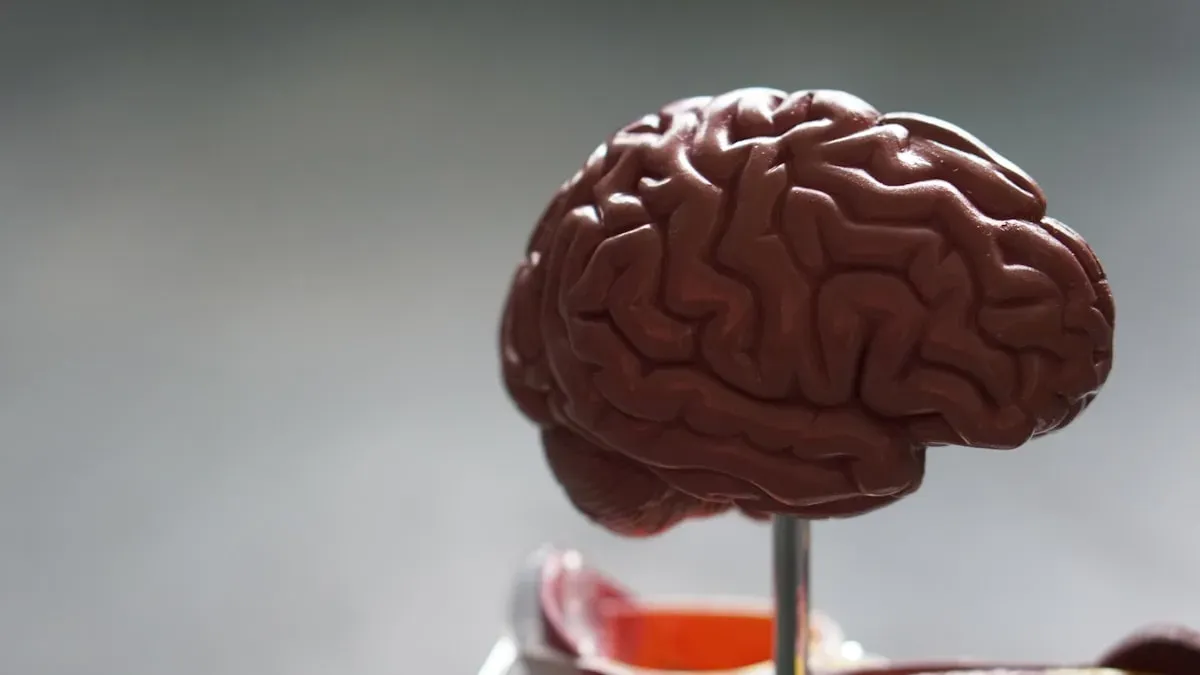
One Sound and You’re a Different Person
Picture this: you’re sitting in a quiet room, deciding whether to invest in a risky venture or play it safe. A random sound goes off. Not an alarm. Not a scream. Just an unexpected noise.
You just became 4% more likely to take the risk. That’s not a metaphor — it’s the result of seven experiments at Yale, published in Nature Communications in 2024. Sixteen hundred participants. The effect has nothing to do with fear or startle. The brain reads unexpectedness as a signal: «the environment is unstable, try something new» — and nudges behavior accordingly.
Four percent sounds small. But think about what it means: your cautiousness isn’t just «who you are.» It’s also the acoustics of the room where you make decisions.
And that’s just one piece of a puzzle that, over the past two years, has completely rewritten what we know about personality.
Thirty Years in Five Boxes
To understand the scale of what’s changed, we need to start with where we were.
OCEAN — an acronym for five core personality traits: Openness to experience, Conscientiousness, Extraversion, Agreeableness, Neuroticism. The model emerged in the 1980s from lexical analysis — researchers combed through the words people use to describe each other and statistically compressed them into five factors.
This framework became the standard. Therapists, HR departments, dating algorithms — everyone relied on five traits. Take the test, get five numbers, and there you are: neatly decomposed.
The model was convenient. Intuitive. Confirmed thousands of times. And, as the past two years have revealed — incomplete.
The Map Was Wrong
The first blow came from mathematicians. In June 2025, a team from Vanderbilt University published a paper in the European Journal of Personality proposing to redraw the personality map from scratch.
Their tool: TGA — Taxonomic Graph Analysis.
TGA (Taxonomic Graph Analysis) — a method that builds a graph of connections between variables and lets the data’s structure emerge on its own, without a preset number of factors. Classical factor analysis says: «split into five.» TGA says: «show me how many.»
The result: personality turned out to have three floors.
At the top level — not five but three meta-traits: stability, plasticity, and disinhibition. In the middle — six traits: neuroticism split into anxiety and emotional dysregulation. At the bottom — 28 facets, each with concrete behavioral descriptions.
The most striking finding is disinhibition. It’s not simply «low conscientiousness flipped around.» It’s a separate dimension linked to impulsivity and rule-breaking — essentially bridging the gap between normal personality traits and clinical psychopathology, a territory that used to live apart.
But if the map of personality turned out to be more complex than expected — could the roots run deeper too?
Personality Is Written in DNA
They do. In 2024, Nature Human Behaviour published the largest genetic study of personality traits to date.
GWAS (Genome-Wide Association Study) — scanning the genomes of hundreds of thousands of people for statistical links between DNA variants and a specific trait. Think of it as sifting through billions of genetic «letters» to find the ones correlated with a characteristic.
Miles McAndrew’s team analyzed genomes of 224,000 veterans from the Million Veterans Program. The meta-analysis covered over half a million people.
They found 62 novel genetic loci for neuroticism and 3 loci for agreeableness. Among the discoveries: the CRHR1 gene, encoding the corticotropin-releasing hormone receptor — a key switch in the body’s stress response system, the very mechanism through which stress «talks» to the brain.
But the most important finding came from Mendelian randomization.
Mendelian Randomization — a statistical technique using genetic variants as «natural experiments» to test causal links. If a gene influences trait A and is also linked to outcome B, that’s evidence that A actually causes B — not just correlates.
The link between personality and mental disorders turned out to be bidirectional. Anxiety doesn’t just lead to neuroticism — neuroticism itself causes anxiety. This isn’t a questionnaire correlation. It’s a molecular mechanism.
And here the story stops being purely academic. Because behind personality traits lie not just genes and diagnoses. Behind them lies a question of life and death — literally.
Conscientiousness as a Survival Question
A 2025 meta-analysis covering longitudinal data from 569,859 people gave a clear-cut answer: yes, personality affects how long you live.
High conscientiousness reduces all-cause mortality risk. High neuroticism increases it. And the effect of conscientiousness is comparable in magnitude to smoking and obesity. Not «helps a little» — it operates at the level of major risk factors.
But how exactly does a personality trait become biological harm? The answer came from Páraic O’Súilleabháin’s work — through a specific molecule.
Interleukin-6 (IL-6) — a cytokine protein involved in inflammatory responses. Chronically elevated IL-6 is linked to cardiovascular disease, diabetes, depression, and accelerated aging.
The chain: low conscientiousness → worse lifestyle habits and chronic stress → elevated IL-6 → systemic inflammation → accelerated aging and disease. Interleukin-6 isn’t just a marker. It’s a mediator — a bridge through which a personality trait materializes into cellular damage.
Sounds like a verdict. Character is written in genes, drives inflammation, shortens life. Case closed?
No. Because the next studies showed something that flips the entire picture: character is not a constant.
Stress as a Sculptor
Two studies from 2024 and 2025 demonstrated that serious life stress — job loss, divorce, severe illness — produces measurable shifts in Big Five profiles. And a 20-year longitudinal study from Psychology and Aging went further: even everyday micro-stressors — traffic jams, workplace conflicts, sleep deprivation — gradually reshape personality.
Chronic stress decreases conscientiousness and emotional stability. Neuroticism rises. The effect accumulates: twenty years of daily minor stressors change the personality profile more than a single major event.
Now let’s assemble the puzzle. Conscientiousness protects against early death through IL-6. Stress destroys conscientiousness. That’s a vicious cycle: stress → declining conscientiousness → rising inflammation → disease → more stress.
But the same mechanism also means the opposite: if character is plastic, it can be repaired. If stress breaks it, targeted stress reduction might restore it. Fatalism is canceled.
And this brings us back to the sounds.
From Years to Seconds
The Yale experiment we opened with hits even harder in the context of the full picture. Stress rewrites character over years. But a random sound rewrites behavior in seconds. Personality isn’t just «who you are.» It’s also what’s happening around you right now.
Feng and Rutledge showed that the brain uses unexpectedness as an environmental stability sensor. Unstable environment — worth taking risks, since old strategies might fail. This isn’t fear or startle. It’s a computational decision-making mechanism operating below conscious awareness.
And there’s one more finding, from an entirely different field, that unexpectedly completes the picture. A 2025 study in Developmental Psychology showed that children as young as four prefer intellectually humble adults — those willing to admit mistakes and revise their views.
Intellectual Humility — the willingness to acknowledge you might be wrong, revise your position when presented with new evidence, and recognize the limits of your knowledge.
Two hundred twenty-nine children, two experiments. Kids chose humble adults as more reliable information sources and more pleasant conversation partners. The effect strengthened with age: 11-year-olds discriminated more sharply than 4-year-olds.
If the evaluation of personality traits forms this early, it’s not just a cultural habit. It’s something fundamental: we seem to be wired from early childhood to detect people capable of updating their views. Nature values plasticity — not just in character, but in thinking.
Critical Assessment
Strengths of these studies:
- Massive sample sizes: from 229 to 569,859 participants
- High-evidence methods: GWAS, Mendelian randomization, 20-year longitudinal designs
- Published in top-tier peer-reviewed journals: Nature Human Behaviour, JPSP, Nature Communications
Limitations:
- GWAS: the 254 discovered genetic variants explain only a small fraction of heritability. These aren’t 254 personality «switches» — they’re 254 small contributions. The rest is hidden in epigenetics, gene interactions, and chance
- Mortality meta-analysis: IL-6 is one pathway from character to disease, but certainly not the only one. The complete mechanism map hasn’t been drawn yet
- TGA: a powerful method, but still without independent replication on other large samples. One study isn’t a new paradigm
- Cross-cultural limitations: most studies were conducted on Western populations. How universal the results are remains an open question
What remains unclear:
- If stress destroys conscientiousness — is reverse «character therapy» through systematic stress reduction possible?
- How would the six-trait TGA model affect clinical diagnostics if adopted?
- To what extent is adult personality plasticity constrained by a genetic «corridor»?
What Comes Next
Seven studies, assembled together, tell one story: personality is not a stone tablet with five words. It’s a dynamic biological system.
Its structure is more complex than we thought: six traits, three meta-levels, 28 facets. Its roots reach into DNA — from CRHR1 genes through interleukin-6 to mortality risk. Its stability turned out to be an illusion: stress reshapes character over years, and a random sound alters decisions in seconds.
This is good news. If personality is plastic — it can be corrected. If we know the molecular pathways from character to disease — we can intervene. If even four-year-olds value the ability to admit mistakes — perhaps we’re wired to strive for a better version of ourselves.
The Big Five didn’t die. It grew up.
Frequently Asked Questions
Can you intentionally change your personality?
Yes, and research supports this. Meta-analyses of intervention studies show that cognitive-behavioral therapy can shift personality traits within 4–8 weeks. The largest changes are seen in neuroticism and extraversion. Meanwhile, stress research demonstrates that character also changes involuntarily — chronic stress reduces conscientiousness and emotional stability over several years.
Will the six-trait TGA model replace the classic Big Five?
It’s too early to say. Samo and colleagues’ work is published in a peer-reviewed journal and is methodologically strong, but paradigm shifts require independent replications across diverse populations. The classic five-factor model has been used for 30 years and confirmed across hundreds of samples. Most likely, TGA will supplement and refine the model rather than completely replace it.
How does conscientiousness affect health and lifespan?
Through multiple pathways simultaneously. Conscientious people exercise more, smoke less, maintain better diets, and follow medical advice more closely. But O’Súilleabháin’s research revealed a biological mechanism as well: low conscientiousness is linked to elevated interleukin-6 — an inflammatory protein that accelerates aging and increases cardiovascular disease risk.
How much of personality is determined by genes versus environment?
Twin studies show genetics accounts for 40–60% of personality trait variation. The 2024 GWAS discovered 254 specific genetic variants, but collectively they explain only a small fraction of this heritability. The rest involves epigenetics, environment, chance, and gene-environment interactions. Personality is not a DNA sentence.
Can unexpected sounds really influence financial decisions?
Yes. Feng and Rutledge’s Yale study with 1,600 participants showed that even neutral unexpected sounds increase risk-taking by 4%. The effect isn’t fear-related — the brain interprets unexpectedness as environmental instability and shifts toward exploratory behavior. This could have implications for office space design and trading floors.
References
Original
- Testing the structure of psychopathology and personality using Taxonomic Graph Analysis
- A genome-wide investigation into the underlying genetic architecture of personality traits and overlap with psychopathology
- Personality and Mortality Risk: A Systematic Review and Meta-Analysis of Longitudinal Data
- Surprising sounds shape risky decision-making
- Do children value intellectual humility over intellectual arrogance?
- Testing of significant changes in big-five personality factors over time in the presence and absence of memory impairment and life-related stress
Related Articles

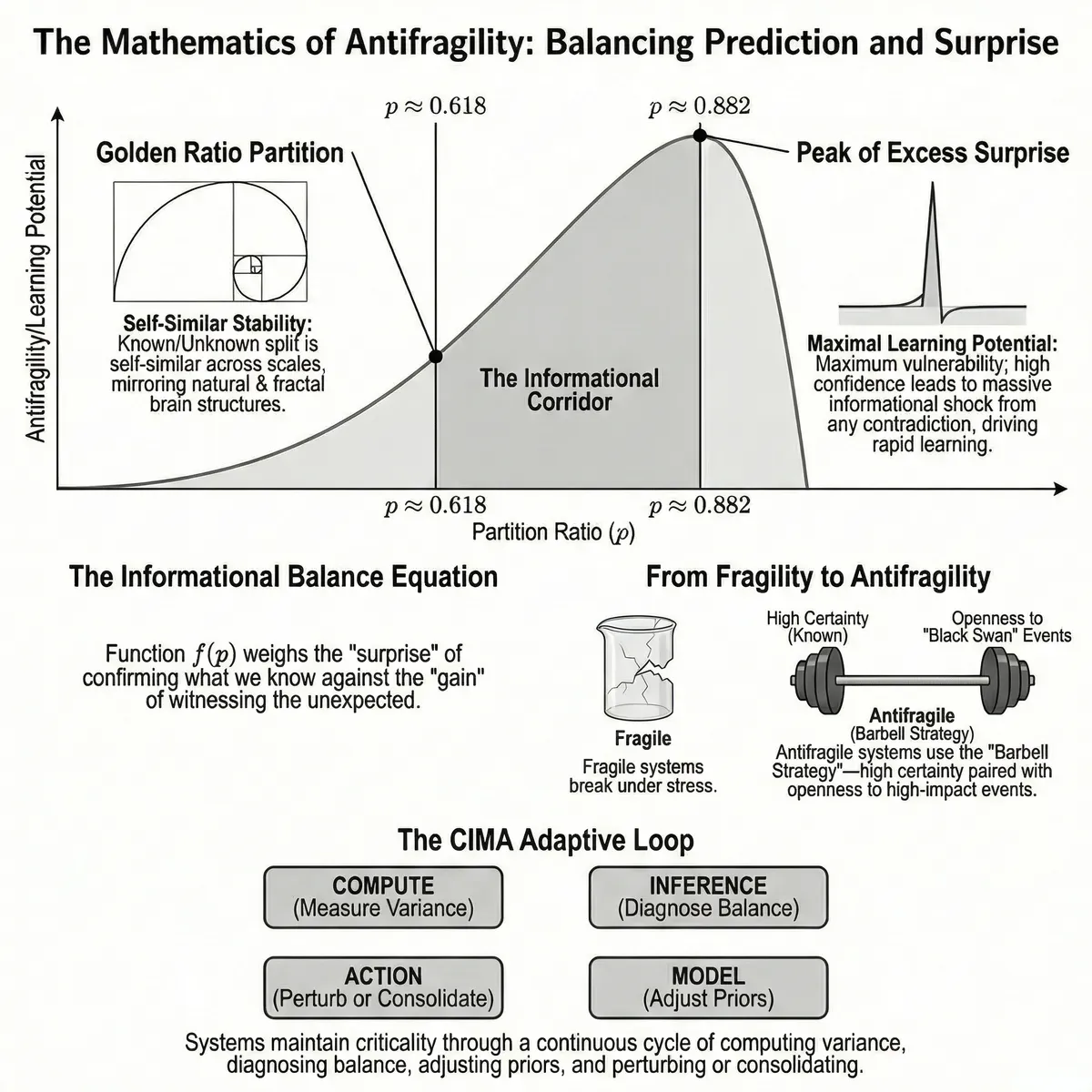
The Golden Ratio in Your Brain: Prediction, Surprise, and Antifragility
A new framework links the golden ratio, information theory, and neuroscience — revealing how the brain balances certainty with surprise to grow stronger.

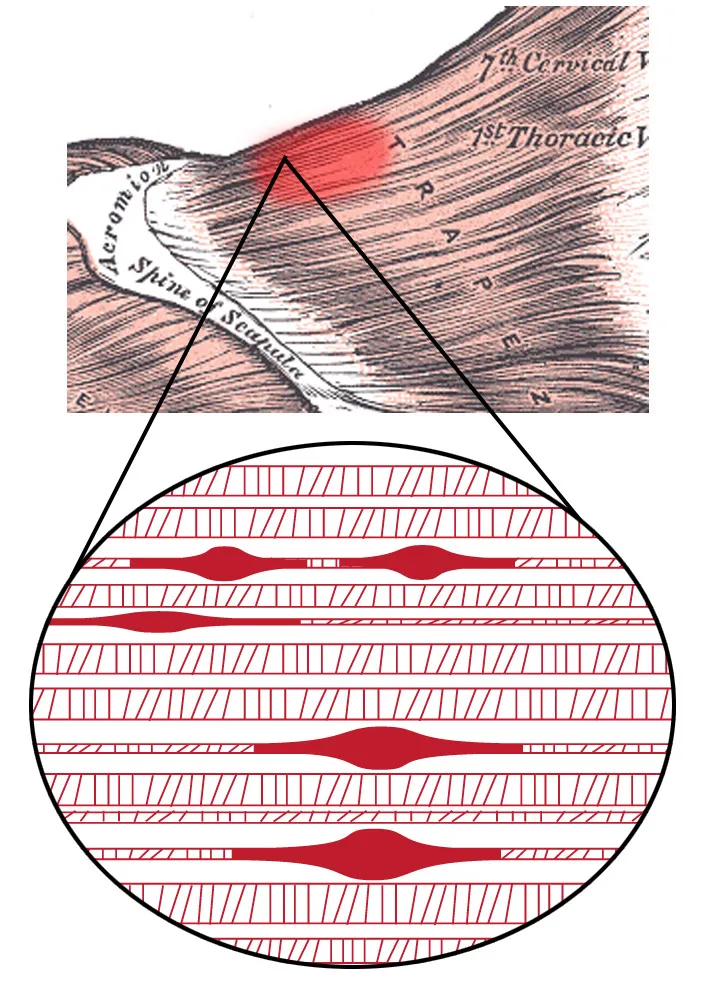
Muscle Knots Explained: The 2024 Trigger Point Breakthrough
Why muscle knots form, how they harm your health, and how to treat them — featuring the molecular pathway discovered in 2024.

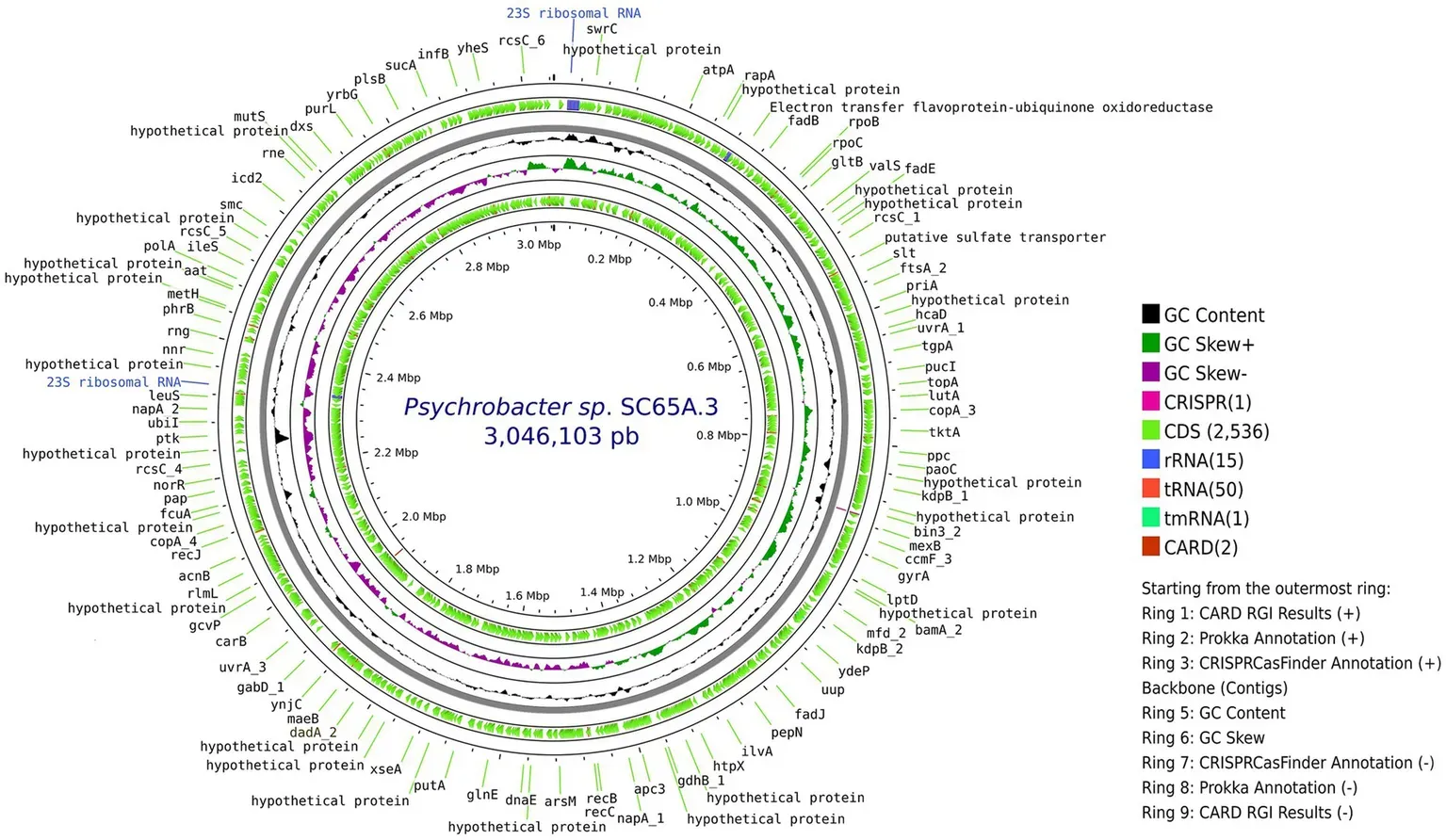
A Bacterium Frozen for 5,000 Years Is Resistant to 10 Antibiotics — and May Help Discover New Ones
A 5,000-year-old microbe from a Romanian ice cave resists 10 modern antibiotics. Its genes may hold keys to discovering new drugs.