Artemis II: Humanity Returns to the Moon After 54 Years
Authors: NASA

The last time humans saw the Moon up close, Richard Nixon was president, a pocket calculator cost $400, and the internet did not exist. That was December 1972, when Gene Cernan climbed back into the lunar module Challenger and sealed the hatch. No one has gone back since.
Not because the Moon stopped being interesting. Not because the technology was lost. The funding dried up, priorities shifted, and three finished Saturn V rockets ended up in museums. For 54 years, every astronaut, cosmonaut, and taikonaut has orbited within 600 kilometers of Earth’s surface — close enough to see city lights, too close to see the planet as a whole.
In spring 2026, four people are about to change that number.
The Longest Intermission in Exploration History
After Apollo 17, NASA pivoted. The Space Shuttle, the International Space Station, robotic Mars rovers — all of it happened within low Earth orbit or through uncrewed probes. Multiple attempts to return humans to the Moon never made it past PowerPoint slides. The Constellation program under George W. Bush. The Asteroid Redirect Mission under Obama. Each was cancelled before a single bolt was tightened on a launchpad.
Low Earth Orbit (LEO) The region of space between 200 and 2,000 km above Earth’s surface. The ISS orbits at roughly 420 km. Every crewed spaceflight since Apollo 17 (1972) has stayed within this band — no human has traveled farther than 600 km from Earth in over half a century.
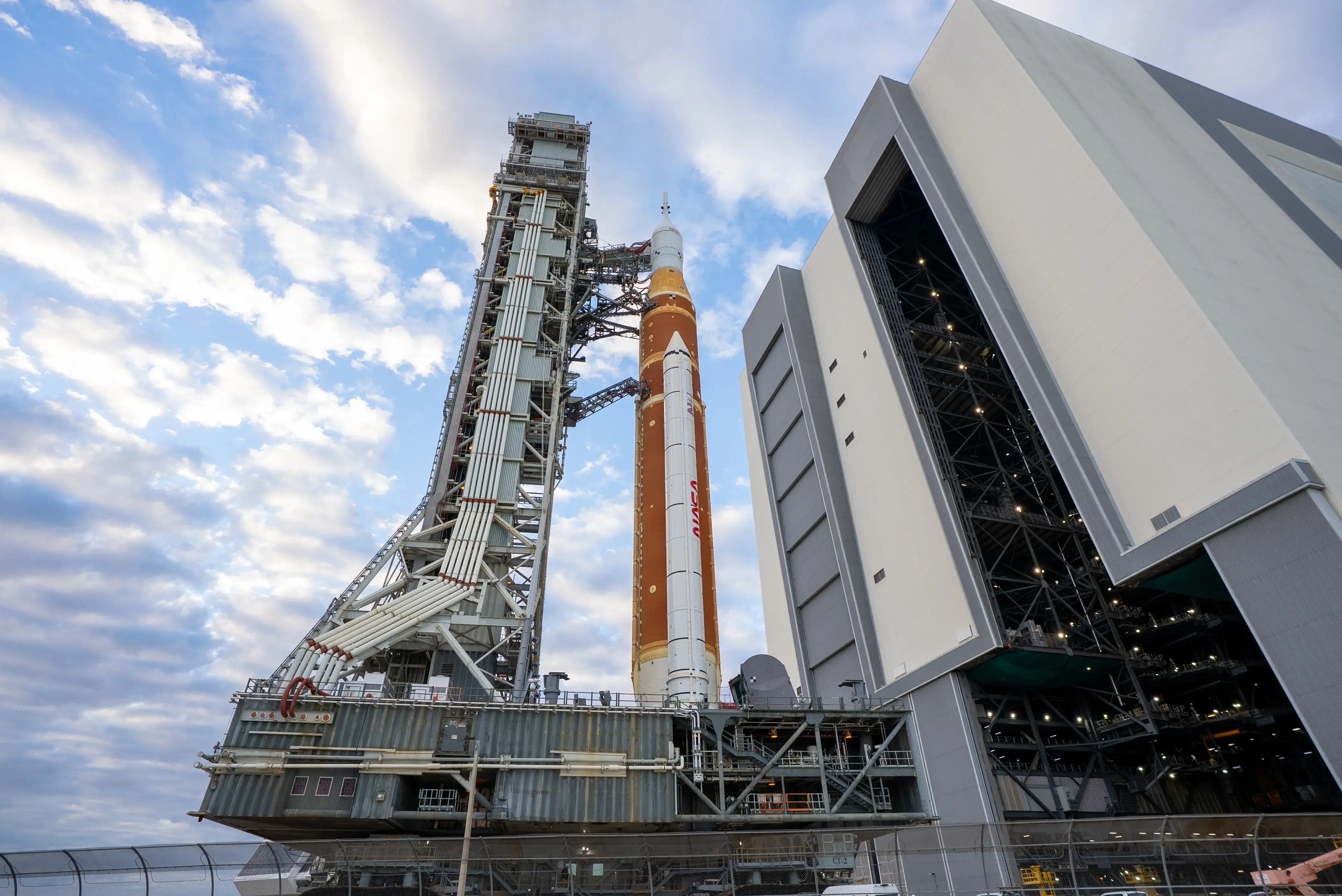
Artemis is the fourth serious attempt in fifty years. The difference: this time, the rocket is already stacked at Kennedy Space Center.
Four People, One Capsule, Deep Space
Every Apollo crew was composed of white male military test pilots from the United States. The Artemis II crew breaks that pattern in three directions at once.

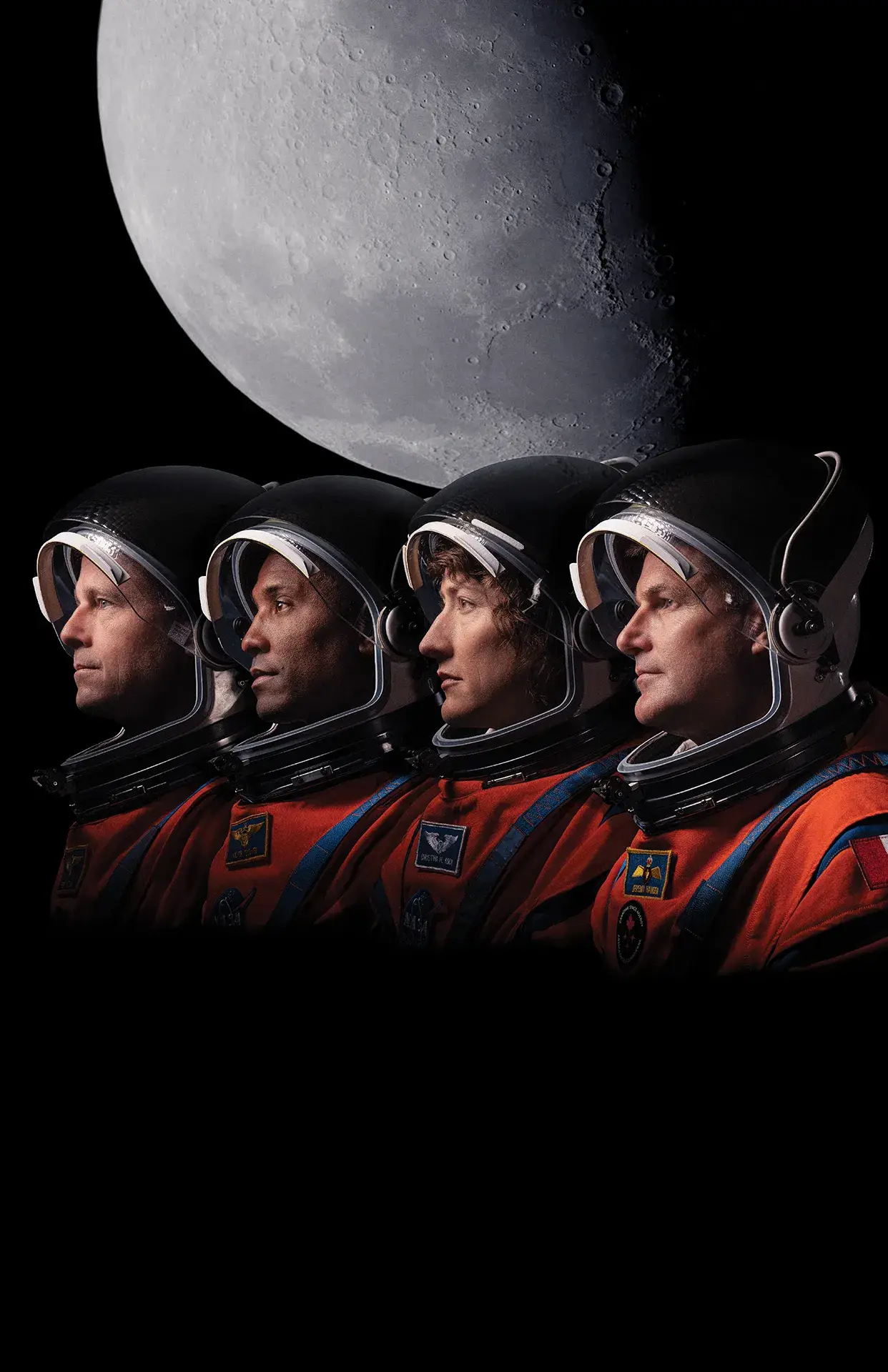
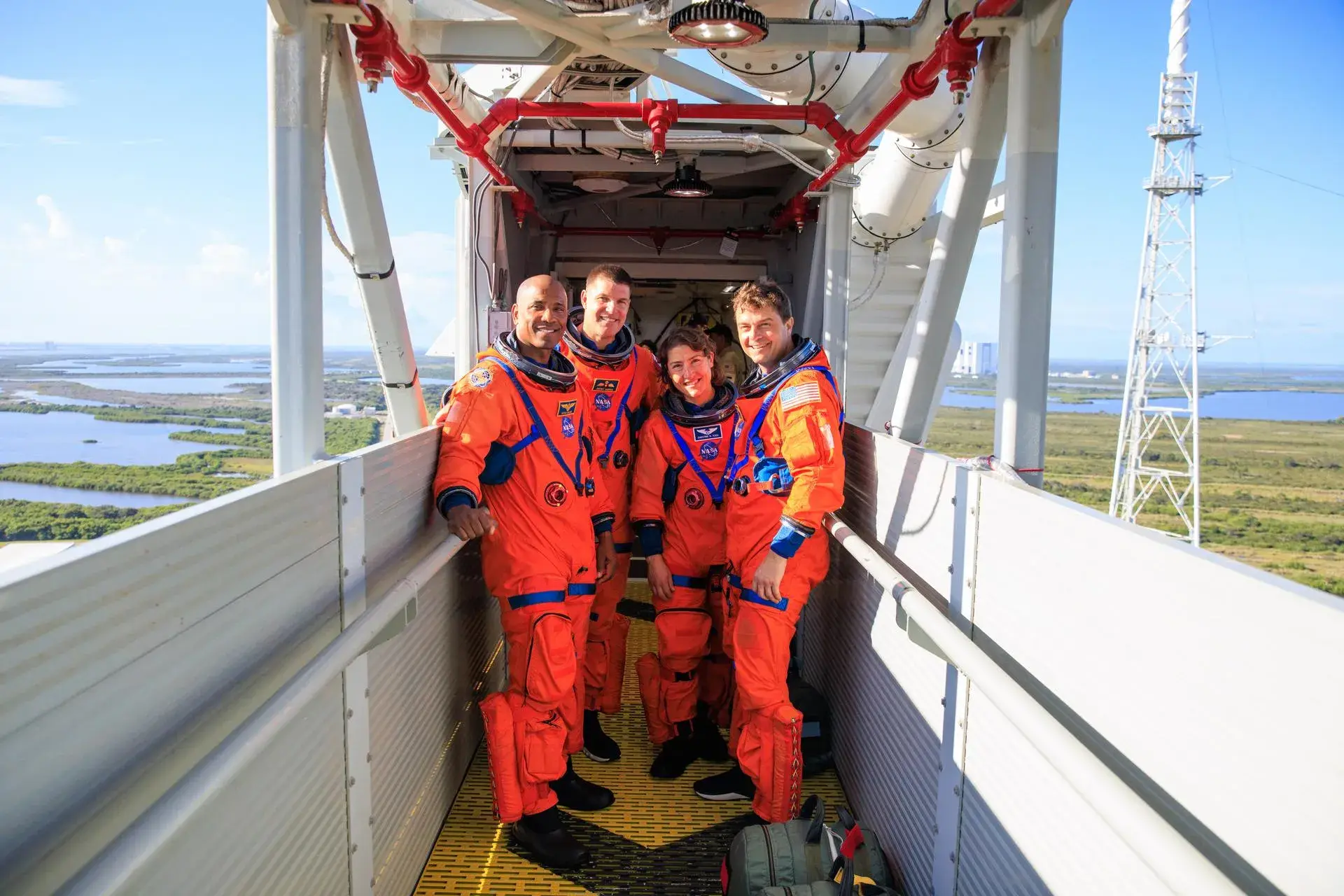
Reid Wiseman (commander) served as a Navy fighter pilot, flew to the ISS, and later led NASA’s entire astronaut corps as Chief of the Astronaut Office. He will command the first crewed flight beyond Earth orbit in over five decades.
Victor Glover (pilot) will become the first Black person to travel beyond low Earth orbit. A naval aviator and test pilot, Glover already flew aboard SpaceX’s Crew-1 mission — the first operational commercial crew flight to the ISS. Thousands of flight hours across dozens of aircraft types.
Christina Koch (mission specialist) holds the record for the longest single spaceflight by a woman: 328 consecutive days aboard the ISS. An electrical engineer who worked at Antarctic research stations before joining NASA. She will be the first woman to leave Earth’s orbital neighborhood.
Jeremy Hansen (mission specialist, Canadian Space Agency) will become the first non-American to fly beyond LEO. A former CF-18 Hornet pilot in the Royal Canadian Air Force, Hansen has never been to space. His debut flight will take him to the Moon.
Deep space In the context of crewed spaceflight, any region beyond low Earth orbit — typically farther than 2,000 km from Earth. The Artemis II crew will travel approximately 380,000 km from Earth, nearly a thousand times farther than the ISS.

The Machine That Must Bring Them Home
The Space Launch System is the most powerful rocket to have completed a successful flight. Two five-segment solid rocket boosters and four RS-25 engines on the core stage produce a combined liftoff thrust of approximately 39 meganewtons — about 15% more than the Saturn V that carried Apollo astronauts to the Moon.
RS-25 A liquid hydrogen/liquid oxygen engine originally built for the Space Shuttle in the 1970s, upgraded for SLS. Each produces about 2 MN of thrust at sea level. The four RS-25 engines on SLS are, quite literally, shuttle engines repurposed for a new era of exploration.
The full stack stands 98 meters tall with a launch mass of roughly 2,600 metric tons. At the top sits Orion — the crew capsule where four humans will spend ten days in a habitable volume of about 9 cubic meters. Apollo’s command module held three people in 6 cubic meters. Marginally more room, but still closer to a camping tent than a studio apartment.
What Orion does have that Apollo lacked: a proper toilet (Apollo crews had famously miserable sanitation arrangements), a next-generation air recycling system, and solar panels instead of single-use fuel cells.
But the most critical component of Orion is the one the crew will never see from inside.
Five Meters Between Life and Plasma
Orion’s heat shield is a 5-meter disk — the largest ablative shield ever built for a crewed spacecraft. The material is Avcoat: an epoxy resin filled with silica microspheres, packed into 186 cells on a titanium skeleton.
Ablative heat protection A thermal defense strategy where the outer material deliberately burns away, absorbing heat and carrying it away from the spacecraft as hot gas. The shield sacrifices itself layer by layer so the crew doesn’t have to.
During reentry at lunar return speeds (~11 km/s, roughly Mach 32), the shield surface reaches 2,800°C — about half the temperature of the Sun’s surface. Avcoat is designed to char and erode in a controlled, predictable fashion.
During Artemis I (uncrewed, November 2022), it didn’t work as predicted.
The charred layer broke away in over one hundred spots. Palm-sized fragments separated from the surface during atmospheric entry. Engineering models had not anticipated this behavior.
NASA’s investigation took over a year. The root cause turned out to be gas dynamics: as Avcoat heats, it releases gases — a normal part of ablation. But the material’s pores lacked sufficient permeability in certain zones. Pressure built beneath the charred crust until pieces popped off like bark from an overheated log.
These findings were published by NASA as part of official Artemis program reports and underwent independent review.
Rather than redesign the shield — which would have delayed the program by years — NASA recalculated the reentry trajectory for Artemis II. Entry angle, skip-phase duration, thermal loading: everything was reoptimized to give gases time to vent through the pores. In January 2026, CNN published an investigation noting that some experts remain skeptical: the shield’s fundamental design is unchanged. NASA counters that the problem was the entry profile, not the material. The answer will come when four people ride that shield through reentry.
Ten Days Between Earth and Moon
Artemis II is not a landing. The spacecraft will not enter lunar orbit. Instead, the crew will fly a free-return trajectory — using the Moon’s gravity to swing back toward Earth.
Free-return trajectory An orbit that uses lunar gravity to redirect a spacecraft back to Earth without requiring additional engine burns. This is the same principle that saved the crew of Apollo 13 after an oxygen tank explosion in 1970.

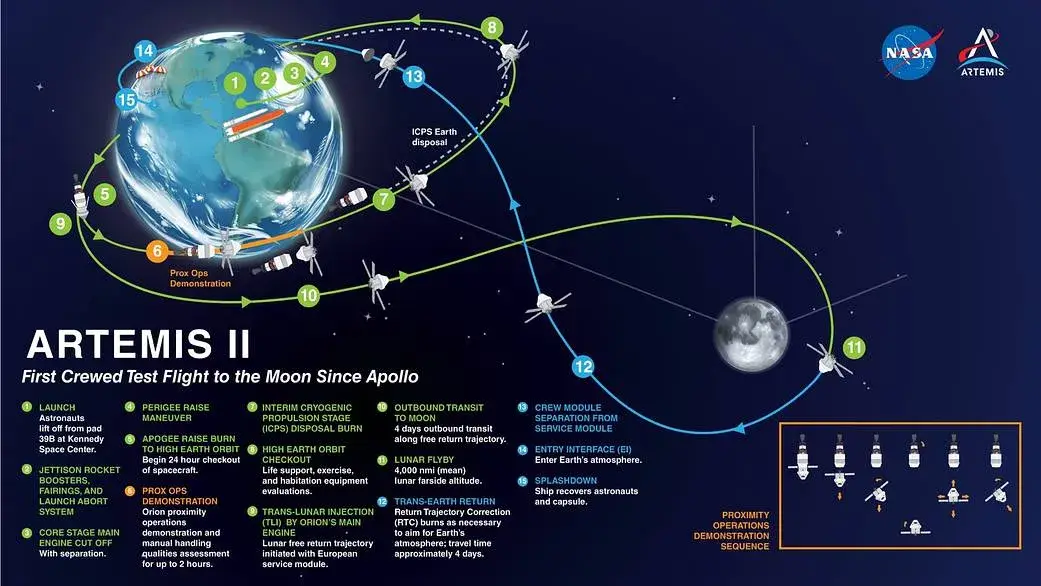
The mission profile begins at Launch Complex 39B, Kennedy Space Center. Two orbits around Earth for systems checks. Then the ICPS upper stage fires a trans-lunar injection burn, accelerating Orion past the threshold where Earth’s gravity no longer dominates.
Four days of coasting through empty space. The crew tests life support, communications, and navigation — everything that ran automatically on Artemis I now has human hands on it. Orion passes over the far side of the Moon, the hemisphere no one on Earth can see, and lunar gravity bends the trajectory homeward.
Then comes the hardest part. Atmospheric entry at roughly 40,000 km/h. Forces up to 4g — each astronaut momentarily weighs four times their normal weight. Windows glow with plasma. Radio contact cuts out. The heat shield takes everything.
Three parachutes. The Pacific Ocean. Ten days and over 1.8 million kilometers of travel.
From Flyby to Moon Base
If Artemis II succeeds, it unlocks a chain of missions that could permanently extend human presence beyond Earth.
Artemis III (targeting 2028) would be the first lunar landing since 1972. Two astronauts would descend to the surface aboard a modified SpaceX Starship HLS. The target: the lunar south pole, where permanently shadowed craters contain water ice.
Lunar water ice In 2009, NASA’s LCROSS probe confirmed the presence of water ice in craters near the Moon’s poles that never receive sunlight. Water is more than a drink — electrolysis splits it into oxygen for breathing and hydrogen for rocket fuel. If extraction scales up, the Moon could become a refueling station for deeper space missions.
Gateway — a small orbital station around the Moon. First modules are planned for delivery during Artemis IV. It would serve as a waypoint for lunar surface expeditions and, eventually, for missions to Mars.
Lunar base — the long-term goal for the 2030s. A semi-permanent settlement at the south pole with habitats, power systems, and resource extraction from lunar regolith. NASA published concept plans in March 2026, though the distance between a concept and actual walls on the Moon is measured in tens of billions of dollars and political cycles.
What the Ledger Cannot Capture
By 2025, the Artemis program had cost over $93 billion. Each SLS launch runs approximately $2 billion at the current cadence of one flight per year. A Falcon Heavy from SpaceX delivers 64 metric tons to orbit for $90–150 million. SLS lifts 95 metric tons but costs 15–20 times more per kilogram of payload.
The schedule has slipped repeatedly. Artemis II was originally planned for November 2024, then September 2025, now spring 2026. Every delay inflates the budget and erodes confidence in a program that promises sustainable lunar presence.
The SLS contracting model — cost-plus agreements with Boeing and other legacy contractors — has drawn sustained criticism from the Government Accountability Office. Under cost-plus, the contractor is reimbursed for all expenses and receives a fixed fee on top, creating weak incentives for efficiency. Companies like SpaceX operate under fixed-price contracts and spend an order of magnitude less.
Yet SLS remains the only existing rocket capable of sending a crew to the Moon today. SpaceX’s Starship promises to be cheaper and more powerful, but it has not yet completed an orbital flight with humans aboard. Gateway and a lunar base represent infrastructure for decades — and every dollar spent on Artemis II buys data that cannot be obtained any other way: how the human body responds to deep space, how the heat shield performs with a living crew, whether life support systems hold up far from any rescue vehicle.
There is also something that resists spreadsheet analysis. For 54 years, no human being has seen the Earth as a whole — a small blue sphere hanging in darkness. The crew of Artemis II will. That perspective, more than any rocket or budget line, may be the most consequential thing this mission brings home.
Frequently Asked Questions
Is Artemis II a Moon landing?
No. Artemis II is a flyby mission — the crew will pass near the Moon and return to Earth without landing on the surface. The first landing is planned for Artemis III, tentatively scheduled for 2028.
Why did 54 years pass between Apollo and Artemis?
After Apollo 17 in 1972, Congress sharply cut NASA’s budget. Priorities shifted to the Space Shuttle and the ISS. Several attempts to return to the Moon (Constellation, Asteroid Redirect Mission) were cancelled as administrations changed and funding fell short.
How is Orion different from the Apollo capsule?
Orion holds four crew members instead of three, uses solar panels rather than single-use fuel cells, and has modern avionics and life support designed for longer missions. Habitable volume is 9 m³ versus Apollo’s 6 m³. The fundamental difference: Artemis is building permanent infrastructure (Gateway, a lunar base), while Apollo was a series of one-off expeditions.
What happened with Orion’s heat shield?
During Artemis I (2022), the heat shield lost charred Avcoat material in over 100 spots during atmospheric reentry. NASA’s investigation found that ablation gases could not vent fast enough through the material’s pores, causing pressure buildup that tore off sections of the charred layer. For Artemis II, NASA adjusted the reentry trajectory but did not redesign the shield itself.
How much does an SLS launch cost?
Approximately $2 billion per flight at the current rate of one launch per year. Total Artemis program expenditure through 2025 exceeded $93 billion, covering development of SLS, Orion, and ground infrastructure.