AI Scans 67,000 Magnets and Finds 25 Rare-Earth-Free Alternatives for EVs
Authors: Suman Itani, Yibo Zhang, Jiadong Zang

What Happened
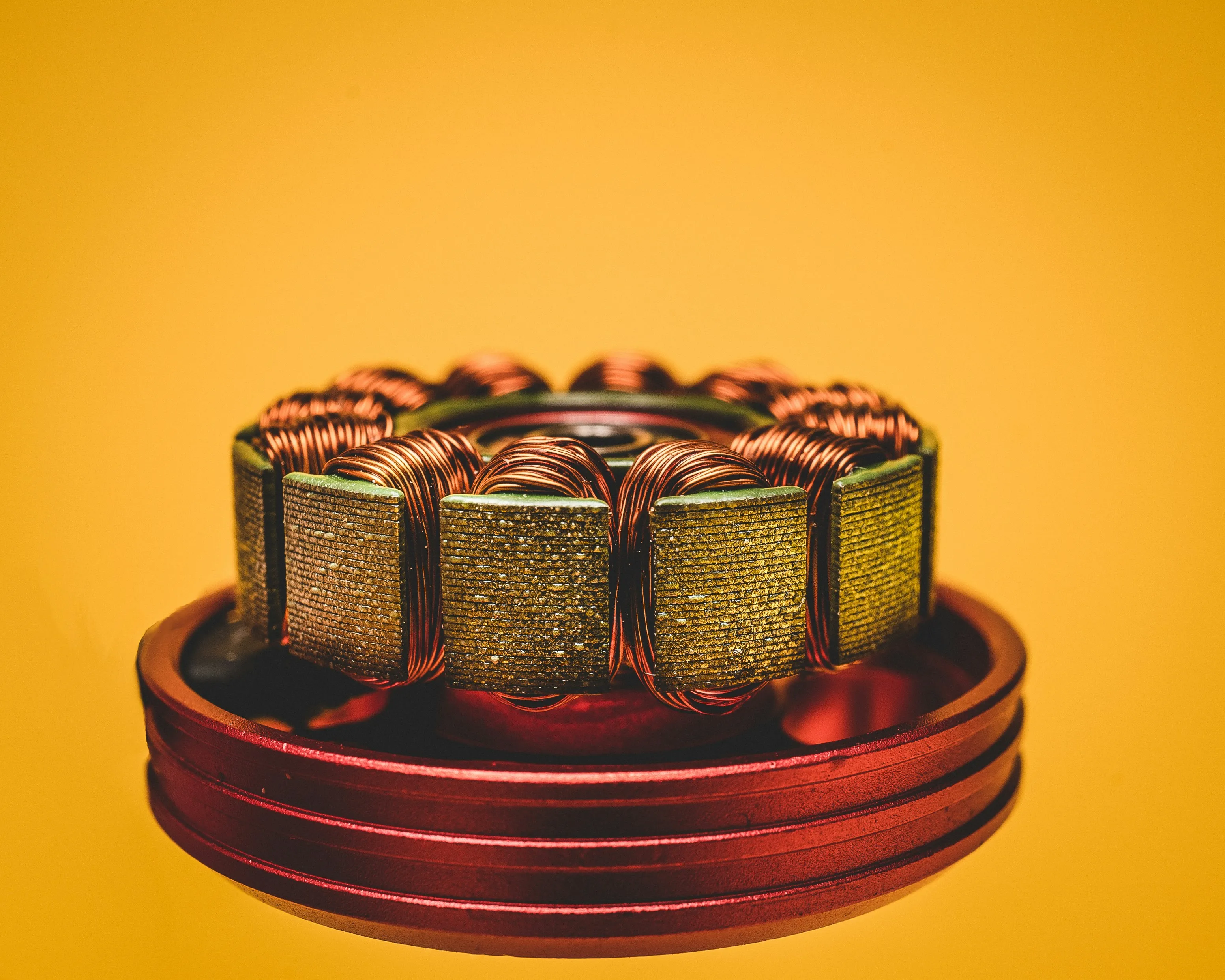
A team of physicists at the University of New Hampshire has built the largest AI-curated database of magnetic materials in the world — and used it to discover 25 previously unrecognized high-temperature magnets. None of these materials require rare earth elements, the geopolitically fraught ingredients that currently power everything from EV motors to wind turbines.
The work, published in Nature Communications, introduces the Northeast Materials Database (NEMAD): 67,573 magnetic compounds with their crystal structures, Curie temperatures, coercivities, and other key properties — all automatically extracted from decades of scientific literature by GPT-based language models.
Why It Matters
Today, about 94% of high-performance permanent magnets are manufactured in China. In 2025, Beijing imposed export controls on rare earth magnets and processing technologies, sending shock waves through EV and clean energy supply chains worldwide. The West is scrambling to diversify, but mining and refining rare earth elements outside China remains slow and expensive.
Rare earth elements — a group of 17 metals including neodymium and dysprosium. Despite the name, they are not actually rare in the Earth’s crust, but economically viable deposits are concentrated in a few countries, and extraction involves significant environmental damage.
Finding magnets that perform well without these elements is one of the most urgent challenges in materials science. NEMAD offers a shortcut: instead of synthesizing thousands of new compounds from scratch, it lets researchers sift through what has already been made but overlooked.
The Details
The team used GPT-3.5 and GPT-4o to parse Elsevier and APS journal articles, extracting 15 properties per compound — from crystal symmetry groups to magnetization values. The resulting database of 26,706 fully characterized entries was then fed to three machine learning models: Random Forest, XGBoost, and an ensemble of 30 neural networks.
XGBoost emerged as the best predictor of Curie temperature — the point above which a material loses its magnetism — achieving an R² of 0.86 with a mean error of just 62 K. The model then screened the Materials Project database for untested compounds and flagged 62 ferromagnetic candidates with predicted Curie temperatures above 500 K. The hottest: Ga₃Fe₄Co₈Si at 1,157 K and FeCo₂Ge at 1,068 K — both well above the 585 K of pure iron.
«We are tackling one of the most difficult challenges in materials science — discovering sustainable alternatives to permanent magnets, ” said Professor Jiadong Zang, who led the project with DOE funding.
What’s Next
The 62 candidate compounds now await experimental validation — the critical step between a promising prediction and a real magnet. Meanwhile, the NEMAD approach is being extended to superconductors, thermoelectrics, and photovoltaic materials.
The timing is sharp. Niron Magnetics plans to open a 1,500-ton-per-year iron nitride magnet factory in Minnesota in 2026, and GM has announced partnerships for rare-earth-free EV motors. If even a fraction of NEMAD’s candidates survive lab testing, the global magnet supply chain could look very different by the end of this decade.
References
Original
Related Articles

NbRe Alloy: First Triplet Superconductor for Quantum Computing
Physicists found triplet Cooper pairs in niobium-rhenium at 7 K — opening a path to fault-tolerant topological quantum computers.

From 100,000 Years to 300: Accelerators vs Nuclear Waste
A DOE-funded accelerator can shrink nuclear waste's danger from 100,000 years to 300 — while generating clean electricity.

A Tungsten Charge Battery Turns CO₂ and Sunlight into Fuel
A tungsten-based photocatalyst converts CO₂ and water into fuel using only sunlight — mimicking photosynthesis at room temperature.